Eastwood's 1773 polar explorer - Mr. Benjamin Drawwater, Royal Navy surgeon and Captain Cook's life-saving medic

Today we look at one of Greasley churchyard's most celebrated graves and investigate the adventurous life story that it commemorates...
Mr. Benjamin Drawwater, Royal Navy surgeon, polar explorer and Captain Cook's medic would have entered the Guinness Book of Records had it been around in 1773. He was the 23-year-old "2nd Surgeon's Mate" aboard Cook's flagship HMS Resolution during the captain's pioneering Second Voyage of Exploration around the world from 1772 to 1775.
Their mission was to discover the mythical Great Southern Continent which meant sailing further south than any ship in history. Drawwater was one of the three-man medical team who saved Capt. Cook's life later in the voyage. History could have been very different without young Mr. Drawwater...

January 1773 - The first ships ever into Antarctica.
Capt. Cook's HMS Resolution and sister ship HMS Adventure
during Cook's second expedition of 1772-75.
Painting - "Down among the Ice Islands" by R Brooks

Drawwater was still learning the brutal naval surgeon's trade. On his return to England, he was promoted to a full surgeon and served aboard Royal Navy frigates fighting the French and the fledgling US Navy in the Caribbean during the American War of Independence... "A good navy surgeon could have a man's leg off in under a minute. Scalpel to cut the flesh, bone saw to cut it off, cauterise to seal it up." His British frigates captured several enemy ships as "prizes". As surgeon he would have had a generous cut of the riches plundered from them pirate-style. He returned to England and set himself up as a doctor in Eastwood then Mansfield.

--------------------

Contents
- Antarctica - breaking ice and records
- The Life of Mr. Benjamin Drawwater of Eastwood (1747-1815)
- Early Life
- Education
- Adventure of a Lifetime - Serving as a Surgeon's Mate with Capt. Cook
  - Jan 1772 - Polar exploration - Heading way down south
  - Apr 1773 - Resupply in New Zealand and cruising Pacific islands
  - Feb 1774 - Saving Capt. Cook's life
  - Mar 1774 - Easter Island
- Return to England
- Full Navy surgeon
- Naval life off the American coast, state-sponsored piracy
- Surgeons and Mates in Fiction
- Life after the Navy and Marriage - Civilian "Doctor" in Eastwood and Mansfield
- Echoes from beyond the grave?
- Epilogue - My Own Time Aboard the "Rattlesnake", a true American Privateer

---------------------------------------------

Antarctica - breaking ice and records
17th January 1773 - Captain Cook and his 112-man crew aboard HMS Resolution become the first people ever to sail below the Antarctic Circle. Sailing through pack ice and dodging icebergs up to 200' high, they got within a few miles of the mainland of Antarctica but came up against huge cliffs of ice forcing Resolution to turn east and carefully coast around them. They reached 67°15'S before turning back north towards New Zealand to resupply in April 1773.

They discovered the icebergs to be an excellent source of freshwater but the ice also brought problems as the ship's astronomer William Wales tells us quoting from his own scientific log book of he voyage...
"By early December 1772, they were sailing in thick fog and seeing 'islands of ice'. Several times the ship's log states... 'This forenoon the rigging was more encumbered with ice, if possible, than yesterday'. Pack ice soon surrounded the ships but in the second week in January, in the southern mid-summer, the weather abated and Cook was able to take the ships southwards through the ice to reach the Antarctic Circle on 17th January 1773. The next day, being severely impeded by the ice, they changed course and headed away to the north-east." 

January 1773 - "Ice islands" in Antarctica - crew of HMS Resolution
collecting chunks of icebergs for freshwater. 
By William Hodges, the ship's official artist

-----------------------------------------

The Life of Mr. Benjamin Drawwater of Eastwood (1747-1815)

When Drawwater died in 1815, this obituary neatly summed up his life adventuring naval career. It appeared in the "Military Register" on Wednesday 14 June 1815

His grave says...

UNDERNEATH
LIES INTERRED THE MORTAL REMAINS OF
BENJ. DRAWWATER. GENTLEMAN OF
MANSFIELD.  LATE OF EASTWOOD
WHO SUDDENLY DEPARTED THIS LIFE ON
THE 2ND OF JUNE 1815 IN THE
68TH YEAR OF HIS AGE.
IN HIS PROFESSIONAL DUTY HE HAD
ACCOMPANIED THE GREAT CIRCUMNAVIGATOR
COOK IN THE YEARS 1772-1775.
HIS VIRTUES WERE COMMENDABLE
AND EXEMPLARY AND WERE HIGHLY
ESTEEMED BY FRIENDS AND RELATIONS
AND HIS SURVIVING FAMILY.
HE WAS A PIOUS AND GOOD CHRISTIAN.
HE LIVED RESPECTED AND DIED
LAMENTED


Early Life
According to his (not infallible) Navy muster records, he was born in King's Lynn in Norfolk in 1747. He may have moved there shortly after his birth from Gosport, Hampshire as another Benjamin Drawwater (his father?) and Mary Reed were married in 1745. The Drawwater surname occurs mostly in the Norfolk/Lincolnshire area. That part of the Norfolk coast was a fine place for a young sailor to learn his trade. Just down the coat in Burnham, Lord Nelson was born in 1758. 

Education
On 2 January 1772, Benjamin Drawwater was assessed by the Royal College of Surgeons as a Surgeon’s 1st mate for a 1st rate ship.  On 7 January, he joined Resolution as Surgeon’s 2nd mate. Nothing is known of Benjamin's earlier education but he appears aged 23 as 2nd Surgeon's Mate on Resolution's muster record so we can assume a medical education of some sort or perhaps a few Norfolk Naval strings were pulled and connections used to favour his early career breakthrough. A normal situation in the Navy of the time. 
We can perhaps infer Benjamin's education progress from his shipmate, the 1st Surgeon's Mate on Resolution, William Anderson. Born in December 1750, he was already a qualified surgeon educated in Anatomy at Edinburgh University, passing the Navy Surgeon First Mate's exam in 1768 and studying Surgery at the Royal College of Surgeons in 1768-1770. Quite a young surgeon! However, we can also infer the dangers of life at sea as Anderson died on Cook's Third Voyage in the Bering Straits on June 3, 1778 aged just 27.

Adventure of a Lifetime - Serving as a Surgeon's Mate with Capt. Cook
23-year-old Benjamin Drawwater signed on with HMS Resolution in January 1772, six months before Cook's Second Expedition set sail from Plymouth. It was the adventure of a lifetime, today's equivalent of travelling to space along with all the danger, high technology and medical advances of the day. They had a copy of John Harrison's mind-blowingly advanced chronometer to test as a navigation aid and their successful avoidance of scurvy was unprecedented at the time.

Capt. Cook's Second Expedition - June 1772 to July 1775
Benjamin Drawwater completed the entire voyage

As part of the three man medical team on Resolution his duties would be the healthcare, diet and good hygiene of the crew. Benjamin's boss was ship's surgeon James Patten and the 1st surgeon's mate was William Anderson. Benjamin was described by John Elliott, a midshipman on the ship, as being "a steady clever man".

Capt. Cook was extremely keen on good hygiene to combat scurvy and other diseases that plagued ships of the time. Resolution's record was incredibly good just one man lost to scurvy on the whole expedition. A diet of sauerkraut and brewed malt wort beer with lemon juice was advocated but it was the hygiene regime, scrubbing decks, washing clothes almost daily and regular bathing that really made a difference. Sister ship Adventure was less strict and many men died as a result.


HMS Resolution's Aug 1772 Muster List shows
23-year-old Benjamin Drawwater born Lynn in Norfolk
as Surgeon's 2nd Mate with 2 months advanced pay of £4-17s-0p
(about twice as much as an average sailor).
William Anderson, the Surgeon's 1st Mate was paid £5-1-7

Polar exploration - Heading way down south
This was not initially a voyage of tropical seas like Cook's 1st voyage. HMS Resolution and sister ship HMS Adventure headed first to Cape Town, South Africa then pushed further south towards the unexplored and unknown region of Antarctica. Ice coated the rigging and they started to encounter what they called "ice islands"...icebergs.

Dodging "ice islands" - HMS Resolution and sister ship Adventure
by William Hodges, ship's official artist

William Hodges' paintings of the voyage are vivid records of British exploration. He was appointed by the Admiralty to record the places discovered and scenes encountered. This was primarily in the form of drawings, with some oil sketches, many later converted to engravings in the official voyage account. He also completed large oil paintings for exhibition in London on his return, which exercised lasting influence on European ideas of the Pacific and particularly the enormous Easter Island statues had never been painted before. The National Maritime Museum holds 26 oils relating to the voyage of which 24 were either painted for or acquired by the Admiralty.

These paintings are all by William Hodges, who travelled as official ship's artist on Cook's second voyage from 1772 to 1775

By December 1772 their ships had reached such an expanse of ice that they could see no end to it and sailed along its edge for two days. On 17 January 1773, Resolution was the first ship to cross the Antarctic Circle.

January 1773 - The ship's log states "This forenoon the rigging was
more encumbered with ice, if possible, than yesterday"
 

Stopped by the Ice - The solid ice had proved to be an impenetrable barrier to further southward progress. Capt. Furneaux of the Adventure wrote, “On Monday the 14th of Dec­ember in Latde 56°South and about four degrees to the Eastward of the Cape [of Good Hope] we were intirely stopt by the Ice which intirely covered the surface of the water so that there was no part to be seen for half the Compass to the Southward from the Masthead, which in all probability extends to the [South] Pole”.  
Robert Palliser Cooper, First Lieutenant in Resolution wrote, “Bro’t too under the Ice & hoisted out the Jolly Boat & sent her on board the Adventure”.  
Georg Forster the botanist “went on board the Adventure, fetched Capt: Fourneaux & the new Lieut. Mr Burney on board & we kept him for a couple of hours, after having breakfasted together”.

Polar conditions were brutal.
Cook's crew went to the edge of Antarctica,
further south than anyone in history.

Cook gave Furneaux fresh orders...  “In case of separation by bad Weather or any other unavoidable Accident you are first to look for me where you last saw me; not finding me in three days, you are to proceed agreeable to former Orders”.  Cook also agreed with Furneaux “some other matters for the better keeping Company and after breakfast he return’d to his Sloop and we made sail along the Ice, but before we hoisted the boat in we took up several pieces which yeilded fresh Water, at Noon had a good observation both for determining the Latitude and Longitude by the Watch”.

The ships... “made again Sail towards the bank we supposed to be Land”, wrote the ship's botanist Georg Forster. We saw several shoals of Pinguins passing the Ship – some were skipping about like Skip-jacks; others dived, & when at a distance looked at us”.  They were prob­ably Chinstrap Penguins (Pygoscelis antarcticis).
 
The engraving of Resolution and sister ship Adventure in Antarctica
was drawn by William Hodges, the crew's official artist.

"Fetched Capt. Furneaux for Breakfast 54°, 55' South. 14th December 1772"
by Robin Brooks

It's now mid January 1773 and Captain Cook's ship Resolution is following the ice cliffs on the edge of the Antarctic continent, further south than any ship in history. It's perhaps is not the typical image we have of Captain Cook's voyages of exploration. More likely to be amongst tropical Pacific islands or the warm waters of Australia perhaps. 

That was Cook's first voyage. This is his second one which left Plymouth in June 1772 and is tasked with finding the mysterious southern Terra Australis Incognita, the Great Southern Continent, or of dispelling the mythical place's existence once and for all. It will be remembered as one of history's most incredible journeys and inspire the Star Trek catchphrase "To boldly go where no man has gone before"

Onboard, along with 111 freezing fellow shipmates, is Benjamin Drawwater, surgeon's mate in the ship's 3-man medical team. The ship's muster roll shows him as crew number 89, signing on in January 1772. He and William Anderson are assistants to ship's surgeon Dr. John Patten. It's their job to ensure the health of the crew and they have a revolutionary new approach to eradicating scurvy, usually the cause of the majority of deaths at sea. On their watch only one man dies of it during the 3 year voyage, a remarkable achievement. Fresh food and water and spotlessly clean conditions are key. 

The Antarctic ice islands are an unexpected and welcome source of fresh water. On 9 January, 1773, Robert Cooper, First Lieutenant in Resolution wrote...
"Seven Islands of Ice in sight... Pass’d sevl small Islands of Ice... Shorten’d sail & Bro’t too close to the Island of Ice & hoisted out the Pinnace & 2 Cutters to take up the Small Ice". 
The ship's official artist draws his impression of the scene...

Collecting fresh water - HMS Resolution in the Antarctic
drawn by crew member and ship's artist William Hodges

Apr 1773 - Resupply in New Zealand and cruising Pacific islands
Blocked by the ice, they turn back north and for several months, resupply in New Zealand and sail to Tahiti, where Cook had been on his first voyage, and other Pacific islands, a welcome break for the crew. A year later in January 1774 Cook heads back south coasting around Antarctica in vast sweeps of the ocean to try and discover Terra Australis Incognita. They get further south this year but once agin pack ice, bergs and huge ice cliffs block the way.

Resolution moored alongside the shore in Pickersgill Harbour,
Dusky Bay, New Zealand, where Cook’s two ships arrived on 11 April 1773.
William Wales's astronomy tent can be seen pitched behind the washing line ashore!

The Resolution went as far south as Cook dared, reaching a latitude of 71° 10' south and longitude 106° 54'  west on 30 January 1774 another world's first record. It had travelled past ice floes and reached pack ice. In his journal Cook wrote, 'I will not say that it was impossible anywhere to get in among this Ice, but I will assert that the bare attempting of it would be a very dangerous enterprise'. The Resolution was then in the most difficult part of the southern ocean; it would be many decades before its journey was replicated.

Feb 1774 - Saving Capt. Cook's life
It was on 26th February 1774 that Cook fell seriously ill and it was during this potentially fatal illness that Surgeon Patten, helped by Anderson and Drawwater, nursed him back to health with soup made from one of Forster's luckless Tahitian dogs. Not so much pets, the 12 dogs had been purchased in Tahiti for "sea provision".
Cook later recorded in his journal that "...was now taken ill of the bilious colic, and so violent as to confine me to my bed, so that the management of the ship was left to Mr Cooper, my first officer, who conducted her very much to my satisfaction. Mr. Patten the Surgeon was to me not only a skilled Physician but a tender Nurse and I should ill deserve the care he bestowed on me if I did not make this public acknowledgement".

Botanist Georg Forster (right)
wrote about Capt. Cook's illness.
His father Johann (left) was also aboard as
the main botanist. 
The ship was running short of fresh food
which was a factor in Cook's illness, botanist Georg Forster wrote... "we are now three months out on this cruize, & it is high time to come to some port & have some Vegetables & fresh provisions, for though few are sick, however those that recover from colds & Rheumatisms cannot recover their Strength & vigour; & it is probable that this weakness will lay them open to the attacks of the Scurvy." When Cook became ill Forster's predictions came true and he wrote... "The Capt [had] felt for several days a pain in his Stomach & being confined, did not chuse to use something: he ate little & what he ate, were hard, slated, indigestable materials, which could afford no nourishment in the weak state of his Stomach: at last the pain grew to such a heigth, that he took to his bed, he took a purge, but vomited... there soon appeared a hiccough which was unconquerable by opiats, warm bathing... & he is now so weak as not to be able to stand on his legs.  If the hiccough will not leave off, his life I think is in danger."
What was Cook's illness?
The story of the illness which afflicted Cook was analysed by Kieron McGovern in Patten's biography. Cook had collapsed in late February 1774 and as usual tried to make little of the affair, concealing it (he thought) from the crew. Cook had almost stopped eating. When Patten was at last allowed to treat him with "purges and emetics, opiates and glysters", which did no good, Patten decided to administer stomach plasters and hot baths which relaxed the body and intestines. The crisis lasted upwards of a week with Patten working tirelessly round the clock to save the Captain. Cook's biographer, Beaglehole, sums it up in the following way: "whatever the original strength of Cook's constitution, whatever his force of mind, the student of his career may be grateful that James Patten was both a skilful physician and a tender nurse."

Nearly all of the authors who have written about Capt. Cook's life and voyages refer to this episode. Alistair McLean, for instance, in his 1972 book on Cook states concisely that "there is no question that it was the surgeon's - Patten, by name - devoted and constant attention that saved Cook's life." It can be stated without hesitation that, but for the medical attention provided by Patten, it is highly likely that Captain Cook would have died in the vastness of the Pacific Ocean.
It has been the subject of much debate as to what exactly ailed Cook and what exactly did Surgeon Patten cure him of? Cook himself in his Journal says he "was taken ill of the Bilious Cholic"
It seems that Sir James Watt has come closest to the correct diagnosis, bearing in mind the passage of years and developments in medical science since the actual event some two hundred years previously.

Aug 1773 - Tahiti war canoes painted by William Hodges.
It was a shortly after visiting the island that Cook fell seriously ill.
A luckless Tahitian dog was cooked to make a broth to nourish the Captain.

James Watt was the Medical Director General of the Royal Navy and Dean of Naval Medicine at the Institute of Naval Medicine. He delivered a paper, "Medical Aspects and Consequences of Cook's Voyages", to a conference held at Simon Fraser University, British Columbia, in 1978. In the course of his paper Watt stated that from the evidence of the accounts of the incident it was clear that Cook had developed serious gastro intestinal symptoms followed by intestinal colic with absolute constipation and hiccoughs. Cook, Watt says, came close to death from what he describes as "a classic picture of acute intestinal obstruction". He concluded that, but for the treatment by Surgeon Patten, the Captain would most assuredly have died.

W. R. Thrower in an article in the Lancet in 1951 ("Contributions to medicine of Capt. James Cook, F.R.S., R.N.") stated that he believed that Cook had an acute infection of the gallbladder with "secondary paralytic ileus" (a paralysis of the lower intestine brought on from an infection). Watt, however, thought that it was "more likely, since Cook was anything but fastidious about eating native foods, that this was a heavy roundworm infestation of the intestine, a condition that can cause acute obstruction". It can also most definitely cause death if not properly treated in time.
Certainly, from the contemporary accounts of the illness and from the above latter-day diagnostics, we can be sure that what ailed Cook was a life-threatening problem which, but for Surgeon Patten, Cook most certainly would have departed this life. 

The consequences of Cook's near death in 1774 would have seriously redrawn the map of Great Britain's fledgling Empire. Benjamin Drawwater and the medical team played a significant role.

March 1774 - Easter Island
Shortly after Cook recovered, on 12 March 1774, the mysterious Easter Island was reached and a full account of the people there and of the amazing statues was recorded. They documented the standing moai statues and expedition artist William Hodges made the first known depiction of them.

1774 - A View of the Monuments of Easter Island [Rap anui], William Hodges

Cook also reported many statues were toppled and the stone platforms, called ahu, which the statues stood on were apparently used for burials, skeletal material being seen scattered about on moai sites...


Return to England
The voyage ended on 30 July 1775, when the Resolution anchored at Spithead, Portsmouth concluding over three years of exploration. Remarkably they had only lost one man to scurvy, thanks to Cook's regime and the 3 man medical crew of Patten, Anderson and Drawwater. 
In the course of the voyage they had visited Easter Island, the Marquesas, Tahiti, the Society Islands, Niue, the Tonga Islands, the New Hebrides, New Caledonia, Norfolk Island, Palmerston Island, South Sandwich Islands, and South Georgia, many of which he named in the process. Cook proved the Terra Australis Incognita to be a myth and predicted that an Antarctic land would be found beyond the ice barrier. On this voyage the Larcum Kendall K1 chronometer was successfully employed by William Wales to calculate longitude. Wales compiled a log book of the voyage, recording locations and conditions and the use and testing of various instruments, as well as making many observations of the people and places encountered on the voyage.
The crew received special medals to commemorate their experience...


HMS Resolution's commemorative medal.
Drawwater is known to have been awarded a medal
for his time serving onboard. This is most likely the one.


Full Navy surgeon
After the voyage, Drawwater was promoted to full Navy surgeon and his name appears on the official Navy Surgeon's List on 20 March 1776. He then saw service in the Mediterranean and during the American War of Independence on the naval frigates HMS Shark, HMS Winchelsea and on HMS Venus during the Battle of St. Lucia on 15 December 1778. The British were fighting the combined naval forces of the fledgling US Navy and their allies the excellently equipped French Navy.

Naval life off the American coast, state-sponsored piracy
Surgeon Drawwater's first posting was on HMS Winchelsea, a Royal Navy frigate heading into the thick of action off the east coast of America in the American War of Independence. The Americans employed maverick privateer "pirate" ships to capture British cargo vessels and harass the Navy. Captured ships known as "prizes" were looted and the spoils shared between the crew. The British Navy was there to protect the cargo ships but they were also allowed to capture and loot the privateers, again dividing the loot. It was state-sponsored piracy on both sides and for the more heavily-armed British ships (and their crew) it could be very lucrative.

In the next few months HMS Winchelsea captured many American "prizes". It would have been a bonanza for the crew and particularly Drawwater. As Surgeon he was entitled to almost as big a cut of the booty as the captain... 

"In December 1776, under command of N. Bateman, she captured the brig Fraiture. Between late December 1776 and early March 1777 she captured the schooners Sally and St. Ann. On 14 May 1777 she captured the brigantine Anne. On 19 May she captured the sloop Lamulant. On 18 August 1777 she captured the polacra La Providance. She captured the sloops Esprence and Elizabeth, the brig L'Creetia, probably between 12 September and 18 October 1777. She captured the sloop Lidia in early November 1777. She captured the schooner Dorothy on 18 November 1777. She captured St. Joseph between 18 November and 7 December 1777. She captured the sloop Betsy between 7–9 December 1777. She captured the sloops Revenge, Catherine, and the schooner Oxford probably between 5–12 January 1778. She captured the schooner Betsy and sloop Victory probably in late January 1778. On 31 May 1778 she captured an unknown sloop, and possibly privateer Rose, 27 leagues (130 km) south of Cape Hatteras"

HMS Winchelsea's sister ship
in the Niger class of frigates HMS Alarm
taking on some Americans.

The Rattlesnake flag "Don't tread on me" 
An American privateer attacks a British ship

Naval battle surgery was basic and brutal, designed for getting the job done quickly, the surgeon's toolkit resembling that of a carpenter...  "A good navy surgeon could have a man's leg off in under a minute. Scalpel to cut the flesh, bone saw to cut it off, cauterise to seal it up." 
This account of a ship's surgeon preparing for battle is from the American War of Independence and shows his key tasks and methods... 


British Conquest of New York and occupation 1776-1783
1776: British Conquest (Revolutionary War). Drawwater was serving here too. 
The Invasion: The British targeted New York City due to its strategic location and made it their main base during the American Revolutionary War.
Key Battles: General George Washington suffered significant defeats, including the Battle of Long Island, leading to the city's capture.
Occupation: The British occupied New York City from 1776 until their final evacuation in 1783, using it as their headquarters for the war effort. 

1778 - The Battle of St Lucia
A head-to-head naval battle for control of the island of St Lucia in the eastern Caribbean involving 10 British ships and 16 French. The British won but with 230 killed and wounded. The French casulaties were 850 killed and wounded. The battle involved a stand off between the elite of the French Naval forces and the Royal Navy who were guarding the garrison on the island. Heavy fire was exchanged and the French were eventually repulsed twice. 
Drawwater was onboard HMS Venus serving as Surgeon so would have been very busy patching up the crew as best he could. He would have been quite experienced by now with the brutality and operating procedures on an active navy ship during a big campaign. 

HMS Venus is positioned far right in the battle plan.

Drawwater's ship HMS Venus on the left fighting the French.
The British won but with 230 killed and wounded
surgeon Drawwater would have been kept busy.

Surgeons and Mates in Fiction
Fictional accounts of life as a surgeon's mate, a step up the ladder from a mere surgeon's assistant, give us an idea of the roles they played...
"For the most vivid account of 18th century naval surgery, nothing beats Tobias Smollett’s comic novel The Adventures of Roderick Random (1748). A ribald romp in the best traditions of bawdy Georgian humour, Smollett’s first novel drew on his experience as a surgeon’s second mate during the ill fated British expedition to the West Indies during war with Spain in 1740-1"
- Smollet writes about a surgeon's mate who is suddenly promoted to surgeon by the ship's captain and his preparations for the upcoming sea voyage...
"...he bade me draw out a list of medicines for a complement of five hundred men, adapted to the distempers of hot climates, and sufficient for a voyage of eighteen months, and carry it to a certain wholesale apothecary, who would also provide me in two well-qualified mates".
We also learn one of the jobs of the surgeon's mates...
"...whereupon I told the poor steward, that I had begged him for my assistant, and desired him to go down and help my mates to get ready the instruments and dressings. "
- Scene from the cockpit where the surgeon helped by his mates carried out his work
- Surgeons and their mates worked below decks in gruesome conditions
- A good surgeon could have a man's leg off in under a minute.
- Scalpel to cut the flesh, bone saw to cut it off, cauterise to seal it up.

"COCKPIT" - In the old sailing navies the space near the after hatchway and below the lower gundeck allotted originally to the senior midshipmen of the ship and later to the surgeon and his mates for their messes. In action it became the operating theatre to which men who had been wounded were carried for the treatment of their wounds. During the battle of Trafalgar in 1805 it was to the cockpit of H.M.S.Victory that Lord Nelson was carried after he had been wounded on deck and where he died.


Life after the Navy and Marriage - Civilian "Doctor" in Eastwood and Mansfield

Drawwater left the navy aged 36 in 1783 and went to live in Eastwood in Nottinghamshire to practice medicine. Drawwaters do not appear to have been associated with the area previously. 

On 05 October 1785, Drawwater married Dorothy Toplis (born 1757, the daughter of Robert and Mary Toplis) at nearby Greasley and the couple lived in Eastwood, where they had a son, Augustus Charles in 1786, and a daughter, Mary in 1789. 

In 1791 he advertises for "WANTED IMMEDIATELY; AN APPRENTICED a SURGEON, in full Practice A handsome Premium will be expected. Enquire of Mr B. DRAWWATER, Surgeon, Eastwood. June 6th?, 1791." Published: Thursday 16 June 1791 Newspaper: Derby Mercury

In 1801, they moved to Mansfield and an advert in a local paper records the move:

1801 Mar 7: Sale of household effects at Eastwood, property of Mr Drawater, surgeon, who is moving to M.

Another advert, from 1810, indicates the Drawwaters owning land in Derbyshire:

1810 Jan 27: For sale: timber at Kilburn, Derbs. Enquiries: Mr Drawwater, M.

While a third advert from 1813, when he was about 65, shows Drawwater ready to sell his medical practice and perhaps retire:

1812 May 23 (dated May 19): For sale or To let: substantial well-built stone Sheppard house in West Gate "the most airy and healthy part of M", "allowed by all to be one of the best built and most substantial in M" *4 rooms per floor, with chambers & attics, new-erected pantry & Brhouse, pump of excellent water near kitchen, commodious backyard, stable for 3 horses with hay loft over, extensive walled garden "lined with choice young Fruit Trees" adjoining backyard*, also a large pew in the Parish Church; "all in complete Repair". Has been "in the Possession of a Surgeon 11 Years, and is worthy the attention of an active Medical Man". In possession of/Enquiries: Mr Drawwater.

Drawwater died two years later in 1815 and his wife, Dorothy, died in 1818. They are buried in Greasley St. Mary churchyard, Nottinghamshire. Plaques read:

Underneath lies interred the mortal remains of Benj. Drawwater, gentleman of Mansfield, late of Eastwood, who suddenly departed this life on the 2nd of June 1815 in the 68th year of his age. In his professional duty he had accompanied the great circumnavigator Cook in the years 1772 - 1775. His virtues were commendable and exemplary and were highly esteemed by friends and relations and his surviving family. He was a pious and good Christian. He lived respected and died lamented.

Underneath lies interred the remains of Dorothy Drawwater, relict of the late Benj. Drawater, who departed this life at Nottingham on the 20th of May, 1818, aged 61 years.

Both their children were mentioned in Drawwater's will written in 1804 but which was proven on 01 June 1816 without any amendments or codicils (PROB 11/1581). Augustus Charles Drawwater married a Catherine Anne (born in Windsor about 1791). He joined the army and was a paymaster with the 4th Dragoon Guards when he retired in April 1847. He died in Bath in September 1857. His wife died at Brighton in March 1878. Mary Drawwater married Peter Wright on 13 December 1821 at St. Mary's, Nottingham. The Wrights may have lived at Eyam in Derbyshire.

His will and bequest to the poor of the parish
In his will is a section leaving a annual sum of money for the local poor.

The Drawwater bequest refers to a charitable legacy established by Dr. Benjamin Drawater (or Drawwater) for the poor of Eastwood, Nottinghamshire. 
Key Details of the Drawwater Bequest:
Founder: Dr. Benjamin Drawater, a former ship's surgeon who had served on Captain Cook's voyages before settling in Eastwood to practice medicine.
Purpose: In 1815 (following his death), he left the interest on £21 for the distribution of bread to the poor.
Distribution: This bread was traditionally given out on Christmas Day.
Context: The bequest is part of the historical poor relief records for Eastwood and Greasley.
Location: Dr. Drawwater married Dorothy Toplis in Greasley parish in October 1785 and later moved to Mansfield. 
Note: The "penny loaf" is a common term for such charity bread in this era, though the search results specifically highlight the £21 interest-based bequest by Dr. Drawater in 1815 for Christmas bread. 

This account of his will is one of the few times we see him called "Doctor". He never seems to have used it himself. So was he really a doctor? Probably not, as I can find no evidence of his full medical doctor's degree or similar qualifications, just his naval surgeon's qualifications from his time before nd after the Cook voyage. A medical degree was not strictly required to be a ship's surgeon. Still, many surgeons had studied at medical universities, and some left practices ashore before putting to sea. The ship's surgeon was often the most educated crew member aboard.

Echoes from beyond the grave?
- Newspaper archive website has adverts for :
"DR. DRAWWATER'S GOLDEN NERVE POWDERS, A NEVER-FAILING REMEDY FOR TOOTHACHE and TIC DOLOREUX, PREPARED by the Proprietor, and sold by Barrow Evans, Chemist, Derby; C. PLuMBE, Sutton; Porrs, Chemist, Mansfield; and may be had of all Medicine Vendors"
Published: Saturday 27 February 1869
Newspaper: Midland Gazette and Mansfield Times


------------------------ THE END ------------------------


Epilogue - My Own Time Aboard the "Rattlesnake", a true American Privateer
I have my own experience to draw on for this article when I "served" on a replica privateer pirate ship, the Rattlesnake, in 1987. She was based on an American ship from Benjamin Drawwater's time, possibly one he would have come up against, although her privateering career, like this new ship, would prove to be a short one.  

1987 - Rattlesnake on the Hudson River overlooking Manhattan

The replica Rattlesnake - was built in the mid 1980's by Canadian advertising exec and artist David May and his two sons. Me and my friend James were on a gap year abroad and came upon the ship being fitted out in Toronto harbour for a voyage to St Kitts in the Caribbean. We blagged out way on board and after some shrewd negotiations landed jobs as crew with the one requirement that we had to grow beards. At 21-years-old we could just about manage one ratty beard between us! 
Many a piratical adventure followed, anything not tied down was fair game, docking at a new spot each evening brought a gaggle of new visitors and experiences. 
We had our own mini cannon and the Captain, himself a perfect replica of the pirate captain Blackbeard, loved playing up to his image and giving displays to the public. Many a swashbuckling deed was done and Captain Dave could certainly spin a yarn or two. I loved every minute of it despite holding lowly Bilge Rat status.

High jinks aboard the Rattlesnake

In true pirate fashion, the ship was on the run from the Canadian taxmen having done a runner from Lake Simcoe where it was funded and constructed. This amazing ship was a true replica of the original Rattlesnake in name, spirit and attitude and is (I think) now located somewhere in the Jacksonville, Florida area. She was most recently in the hands of the local Maritime Heritage Foundation and rumour had it that she was due to be completely restored. However the last I heard (in 2015) was that the Jacksonville Maritime Heritage Foundation had closed and the Rattlesnake had disappeared from the Jacksonville quayside. 

Us in our Salvation Army charity shop clobber.
Kiwi, Capt Dave, Debs, Chris, Brian, James.

Capt Dave, Harv with captain's son and ship's carpenter Steve (with tea cozy)

James at sea

The original Rattlesnake - The Revolutionary War privateer USS Rattlesnake was designed in 1779-80 by John Peck, a Boston naval architect. The original Rattlesnake was built in Plymouth, Massachusetts, and in style resembled a miniature frigate, which had a separate quarterdeck and forecastle. These features are rather unusual for a privateer. She carried up to 20 guns (probably six and nine pounders) and had a usual complement of 85 men.
The original USS Rattlesnake was commissioned by the Continental Congress of the fledgling United States and helped to win the Revolutionary War by bringing in captured British ships. Privateer action in the North Florida area was intense as Georgia was held by the American Patriots and Florida was held by the British. Little is known of her career except that it was brief.
Late in 1781, she was captured by the British frigate Assurance (44 guns) and taken into the Royal Navy as the Cormorant (14 guns). Sometime around 1784, it was renamed Rattlesnake after the British discovered they already had a ship named Cormorant and soon afterward was sold out of the British Navy. Little is known as to her disposition from here except that she may have ended up as the French ship Le Tonnant as her lines were exactly the same as Rattlesnakes’.
The vessel was unusually fast, and her hull lines were recorded by the British Admiralty after her capture and have come down to us today. 

Aug 1872 - Rattlesnake's plans made
after being captured by the Royal Navy

The Rattlesnake flag "Don't tread on me" 
An American privateer attacks a British ship


Sailing South from Toronto to New York City and Florida
November 1987 -  After a few weeks refitting in Toronto ("too much eh!"), we sailed across Lake Ontario to the US port of Oswego heading for the Erie Canal. I remember no passport control or customs checks on arrival.


We then had the not insubstantial task of dropping all the masts, sails and rigging for the passage through the canal which was tackled with cheeky panache by the Captain by "borrowing" a handy grain silo crane. 


As the winter temperatures dropped below freezing, we lived on endless tea and pretzels from the galley kitchen served by world-wise Irish granny Anne. Each morning the ship broke the ice to resume our slow progress towards the Hudson River and New York City. 

The sight of Rattlesnake moored by Liberty Park on the Jersey shore overlooking the Manhattan skyline is something I'll never forget. Street-wise New Yorker Jake showed us around town and taught us some local street lingo "Eh breds, av a dreew..." I've still no idea what it means but we always got a warm welcome when we used it.

Under sail on the Atlantic Ocean Rattlesnake looked beautiful. I'd sit on the bowsprit with a cup of tea watching the dolphins surfing under my feet. Definitely a high point.

Rattlesnake under sail on the Atlantic


Norm and Capt Dave

We said farewell to Rattlesnake and her small, close-knit crew in Delaware Bay after hatching plans to run south for the Mexico border. Our visas were close to expiry and we didn't need the Feds on our tails for tax evasion and immigration offences too. 
A few months earlier on a film set in Vancouver we'd hung out with an unknown young actor called Johnny Depp. His fedora hat from the 21 Jump Street set had become one of the symbolic acquisitions of our trip. As we left the pure pirate antics of Rattlesnake behind, we felt the spirit of Captain Jack Sparrow was alive and well! I spiritually donned Johnny Depp's battered fedora and headed for the Mexican sunset...   


The next we heard of the Rattlesnake was over a year later when First Mate Kiwi visited us in the UK. Apparently the authorities had finally caught up with Capt Dave in Jacksonville, Florida and the ship had been impounded and left to rot in the local scrapyard. Various rumours of restoration projects have been heard but nothing for certain. As of July 2026, the final fate of the Rattlesnake remains a mystery...

Rattlesnake's crew
Captain Dave
Captain's wife Barbara and son Steve May
First Mate - Kiwi, AKA Vikki Harraway who was born on Pitcairn Island and had crewed on a replica of HMS Bounty
Second Mate and ship's chippy - Brian
Captain of the Tops - Norm (and Norm's dad Harv in Toronto)
Cook - Irish Anne
Bilge Brothers - Patrick, Dirty Debs Turner, James T, Chris A
Ship's cat Tiddles also called Gonad for very two evident reasons
Regular visitors - Jake Barbera, Neil Hammond

Brian and Tiddles (AKA Gonad), the ship's cat

Sleeping arrangements were authentically basic!
Top - Harv, Chris
Middle - Pat, Chris, James
Bottom - Harv, James, Pat, Jake

Filming an advert for Eastern Airlines on a Munity on the Bounty theme!
They trained us in "movie" sword fighting.
The film crew's bottomless grub truck was brilliant too!


Anne the ship's cook

First Mate Kiwi working in Toronto harbour
before our intended departure for the Caribbean.
Much work was done to make the new ship officially sea-worthy
including 2 lifeboats, radar reflectors and sealing of hatches.

Rattlesnake was dwarfed by the CN Tower

James busy making wooden block tackle and belaying pins

A traditional wooden block tackle pulley

Rattlesnake's history reveals a possible link to Captain Cook

Model of the Rattlesnake based on drawings and pictures
from the replica ship I sailed on.

The replica Rattlesnake under construction in Jackson's Point, Lake Simcoe, Canada...

The Jackson's Point Pirate
From Michael Smith's Archives:
The Rattlesnake was constructed in Jackson’s Point Harbour Park under a cooperative agreement with the Town, in particular the Economic Division of the Development Services Department.

The builder, David May, enjoyed free rent of the park as I recall and likely other financial assistance in exchange for offering lake tours. The day of the launch it was covered by the CBC and about 2,000 persons attended. Later that summer, on the July long weekend, I believe, while Georgina was celebrating its change in municipal status from Township to Town in the Sutton Arena auditorium, the Rattlesnake was seen sailing down the Trent Canal with Toronto Harbour as its destination. The headline in the Advocate that week was “Georgina becomes Town loses Ship”.

The Town was successful in getting a temporary injunction freezing the ship in the canal. However, it was subsequently overturned if I recall and it carried on its way to Toronto Harbour. From there it made its way to Florida, where rumour has it David lost it in back-mooring fees.


Notes and Sources

Big thanks to Rev David Speed for help compiling this article.
His Powerpoint talks on Drawwater have been proving very popular.

Second voyage of James Cook
Beaglehole's definitve account of Cook's journals for the 2nd voyage (Drawwater and the surgeon's get a brief mention)

"The Circumnavigators" book has a good section too.
Very good log interpretation...

"A voyage towards the South Pole, and round the world. : Performed in His Majesty's ships the Resolution and Adventure, in the years 1772, 1773, 1774, and 1775. by Cook, James, 1728-1779"

Journal of Captain Cook's voyage round the world in HMS Resolution (original log entries)
Capt Cook Society Cook's Log quarterly magazine - very good Antarctic extracts from log Dec72-Feb73

The voyages of Captain Cook : 101 questions and answers about the explorer and his three great scientific expeditions by Cornish, Anthony

Captain Cook's beer: the antiscorbutic use of malt and beer in late 18th century sea voyages
Captain Cook’s beer: the antiscorbutic use of malt and beer in late 18th century sea voyages Brett J Stubbs PhD https://apjcn.qdu.edu.cn/12_2_10.pdf
Captain James Cook, Scurvy, and the Use and Misuse of Herbs 

CAPTAIN COOK'S SURGEONS by W. E. SNELL

Surgeon James Patten (c. 1748-1797): The Dublin Man Who Saved Explorer, Captain James Cook by Kieran McGovern

1st Surgeon's mate Thomas Whitton Andrews (?-1813)

The Surgeon's Mates
Surgeon's mates occupied a social and hierarchical position on eighteenth century naval vessels somewhere between the lowerdeck and the quarterdeck. They administered to both, and were, in a special sense, something of a conduit between the two. 
General (and fictional) account of surgeon's mate...
Surgeon's mate : the diary of John Knyveton, surgeon in the British fleet during the seven years war, 1756-1762 by Gray, Ernest A. 

The 2 Surgeons
On 16 November, First Lieutenant Shank in Adventure wrote to Cook “As my Ill state of health will not admit of my proceeding on our intended Voyage to the South Seas, must beg your Leave to quit, so as to be Enabled to Return home”. Cook wrote to “the Surgeons of His Majestys Sloops Resolution & Adventure”, who were James Patten and Thomas Andrews, respectively. “You are hereby Required and Directed to examine into the Nature of his Complaint, and Report to me your opinion thereon and how far you think his Request is reasonable”. The surgeons replied, “he has for Several Months past been off sick with a Slow Nervous Fever of Violent Rheumatic pains, which has greatly reduced and emaciated him; we are therefore of Opinion that his Request to quit is not only reasonable but absolutely Necessary for the establishment of his Health”.

Health onboard and Saving Captain Cook's life

https://archive.org/details/bim_eighteenth-century_a-voyage-round-the-world_forster-georg_1777_2/page/36/mode/2up?q=surgeon

James Watt, Medical Director General of the Royal Navy and Dean of Naval Medicine at the Institute of Naval Medicine delivered a paper, "Medical Aspects and Consequences of Cook's Voyages", to a conference held at Simon Fraser University, British Columbia, in 1978. In the course of his paper Watt stated that from the evidence of the accounts of the incident it was clear that Cook had developed serious gastro intestinal symptoms followed by intestinal colic with absolute constipation and hiccoughs. Cook, Watt says, came close to death from what he describes as "a classic picture of acute intestinal obstruction". He concluded that, but for the treatment by Surgeon Patten, the Captain would most assuredly have died.
"Captain James Cook and His Times": Conference held at Simon Fraser University, British Columbia, Canada, 16-19 April 1978

It muſt be allowed, at the ſame time, that, as far as human art, and a humane beneſicent diſpoſition will go, our worthy ſurgeon, Mr. Patton, took the beſt precautions poſlible to preſerve the healths of all on board, by ſuggeſting the proper methods to captain Cook, and by watching over us with unremitted aſſiduity. I wilt venture to affirm, that it is to him alone, under Providence, that many of us are indebted for our lives ; and that his country owes him the preſervation of thoſe valuable and uſeful members of the commonwealth, who were ſent out on this dangerous expedition.


Family tree of Benjamin Drawwater


Sex for an iron nail - a sailor's life in Tahiti
A tale from Cook's first voyage - After three months on open water the mountains of Tahiti were sighted and the Endeavour landed at Matavia Bay on April 13, 1769. Before going ashore, Cook issued a set of rules to his men in order to promote the best relations with the island’s inhabitants. Foremost on the list was cultivating a friendship with the locals, while other rules regulated trade and responsibility. The last rule prohibited the exchange of “Iron, or anything that is made of Iron…for anything but provisions. This last rule was necessary to literally keep the ship together. The Tahitians were a metal-less culture and thus held metal objects, such as nails, scientific instruments, and tools, in extraordinarily high regard.
According to sailors on the Dolphin, which had landed in Britain just before the Endeavour sailed, Tahitian women were beautiful and uninhibited. They would trade sexual favours for a simple iron nail — the very things that held wooden ships together. For men at sea months on end, such a price was so beguiling that they nearly pulled the ship apart to procure the costs of love. Cook wasn’t about to jeopardize the rest of his expedition over these dalliances and thus took the necessary steps to protect his ship.


Captain Cook's second voyage (1772-1775)

The ships left Plymouth in July 1772 and sailed towards the Antarctic Circle, crossing it for the first time in January 1773. Antarctic fog and sea-ice separated the two ships in February and both sailed to a rendezvous in New Zealand that had been charted by Cook three years previously.

On the way to New Zealand, the Adventure, commanded by Tobias Furneaux, surveyed the southern coast of Van Diemen's Land (now Tasmania) before reaching the rendezvous in mid-March 1773. Cook arrived with the Resolution in May 1773. From June, both ships sailed across the South Pacific, making stops at Tahiti, Ra'iatea and Tonga before returning to New Zealand where the Adventure made for home. At Ra'iatea, the expedition picked up a young Polynesian man named Mai (or Omai) who travelled with the Adventure to London, arriving in November 1774. Mai spent two years in London where he was much admired and was introduced to many influential figures of the age, including George III. Cook returned him to Ra'iatea in 1777


Benjamin Drawwater - Born 1747 to 1815 aged 68. Buried Greasley churchyard

Captain Cook's second voyage (1772-1775) - Drawwater was aged 25 in 1772

On 2 January 1772, Benjamin Drawwater was assessed by the Royal College of Surgeons as a Surgeon’s 1st mate for a 1st rate ship. On 7 January, he joined Resolution as Surgeon’s 2nd mate.
Source 

Cook charted and discovered new island's in the South Atlantic
including South Georgia.


---------------------------------
https://sgmuseum.gs/chapter/cook-chapter-1/
The full detail and outcome of exped #2


-------------------

https://www.captaincooksociety.com/remembering-cook/memorials/memorials-for-other-people/benjamin-drawwater-tomb-greasley-nottinghamshire-uk
"Dr Benjamin Drawwater was surgeon’s mate to the Surgeon James Patten on Captain Cook’s second voyage on the ship Resolution. Born in 1748[?], he died 2nd June 1815.
The Erewash Countryside Volunteers who funded the plaque near the tomb, were established in 1986, and work on conservation of the Erewash and Leen valley areas."


Inscription:
The tomb inscription:

“UNDERNEATH
LIES INTERRED THE MORTAL REMAINS OF
BENJ. DRAWWATER. GENTLEMAN OF
MANSFIELD.  LATE OF EASTWOOD
WHO SUDDENLY DEPARTED THIS LIFE ON
THE 2ND OF JUNE 1815 IN THE
68TH YEAR OF HIS AGE.
IN HIS PROFESSIONAL DUTY HE HAD
ACCOMPANIED THE GREAT CIRCUMNAVIGATOR
COOK IN THE YEARS 1772-1775.
HIS VIRTUES WERE COMMENDABLE
AND EXEMPLARY AND WERE HIGHLY
ESTEEMED BY FRIENDS AND RELATIONS
AND HIS SURVIVING FAMILY.
HE WAS A PIOUS AND GOOD CHRISTIAN.
HE LIVED RESPECTED AND DIED
LAMENTED”

 A plaque in front of the tomb repeats the above, and added below is:

FUNDED BY                                            1991
THE EREWASH COUNTRYSIDE VOLUNTEERS


-------------------------------

David emailed me his Powerpoint slides...

"It was great to see such a good turnout today for Reverend David Speed’s presentation about Benjamin Drawwater. He had done a significant amount of research and it was fascinating to learn about the details of Benjamin’s life, and also about Captain Cook’s voyage. His gravestone is in Greasley graveyard, alongside that of his in-laws, the Toplises. We learned about how ships employed first and second mates to surgeons, who then could become qualified as surgeons in their own right.

The voyage lasted three years, but with very little loss of life, undoubtedly due to the strict hygiene and dietary rules introduced by Captain Cook. It was a great honour to be included in the journey of the already famous Captain Cook and clearly stood Benjamin Drawwater in good stead in his subsequent career. After further serving as surgeon in a variety of ships, mainly in the American War of Independence, he was able to retire from the navy and set up a practice in Eastwood. Unfortunately, we do not know which building that was in."

-----

Marriages

Marriage of mum and dad Date 16 Mar 1745
Marriage Place Holy Trinity,Gosport,Hampshire,England
Spouse Mary Reed mother
Benjamin Jnr was born in 1747

Child June 1765 28th Elizabeth Martha

Family tree

On 5 October, 1785, Benjamin DRAWWATER married Dorothy TOPLIS in this parish. Benjamin had been one of the Surgeon's mates on Captain COOK's voyages of the 1770s. Benjamin died and was buried in Greasley churchyard in June, 1815.

Their first child, Augustus Benjamin Charles DRAWWATER was baptized on 07 Aug 1786 in the chapel at Eastwood, Notts.

Their daughter Mary DRAWWATER was baptized on 1 April 1789 in Greasley.

----------------


Characters

Surgeon’s 2nd mate Benjamin Drawwater (aged 25) 1747-1815

Surgeon James Patten (aged 24) from Dublin c.1748-1797
James Patten, surgeon, "not only a skillful Physician but a tender Nurse and I should ill deserve the care he bestowed on me if I did not make publick acknowledgement"48, and, "this together with the great skill care and attention of Mr Patten the Surgeon, has not a little contributed to that uninterrupted good state of health we have all enjoyed."

Thomas Whitton Andrews (?-1813)
Thomas Whitton Andrews sailed on Cook’s Second Voyage in Adventure as the surgeon.  Details of his birth remain unknown.  He had recently qualified as a ship’s surgeon having gained his diploma on 3 August 1769 and passed his examination for surgeon first rate on 8 February 1771.1  He joined the ship on 25 December 1771 from Somerset. 

James Cook Capt (aged 44 ) 7 November 1728 – 14 February 1779
Joseph Banks did not go (aged 29) -  (24 February [OS 13 February] 1743 – 19 June 1820

Georg Foster (aged 18) 27 November 1754 – 10 January 1794
His father Johann (aged 43) 22 October 1729 – 9 December 1798
Georg Forster - a 17 year old artist/botantists view
German American-dubbed but good documentary https://www.youtube.com/watch?v=7fhGXzX406U

A Voyage round the World in His Britannic Majesty's sloop, Resolution, commanded by Capt. James Cook during the years 1772, 3, 4 and 5 ; v. 1 / by George Forster. 1777

Johann Reinhold Forster https://en.wikipedia.org/wiki/Johann_Reinhold_Forster

The Journey of Anders Sparrman: a biographical novel. Wästberg, Per. 2010
Dr Anders Sparrman (aged 24) (27 February 1748 – 9 August 1820) was a Swedish naturalist, abolitionist and an apostle of Carl Linnaeus.

John Marra, or the Crooked Cook Book
John Mara – The Irishman who ‘Cooked Captain Cook’s Books’.
Journal of the Resolution’s Voyage in 1772, 1773, 1774, and 1775, on Discovery to the Southern Hemisphere, COOK, CAPTAIN JAMES -JOHN MARRA


Below from The Men Who Sailed with Capt Cook

Benjamin Drawwater

Benjamin Drawwater (1748-1816).

Benjamin Drawwater was taken on as Surgeon's Second Mate on the Resolution during Captain Cook's second voyage, was born about 1748 and lived the later part of his life as a doctor in Nottinghamshire. However, his exact origins remain unclear (April 2007). He may have been born in Nottinghamshire but another Benjamin Drawater (only one w) married a Mary Reed at Holy Trinity, Gosport on 16 March 1745 and, together, the Drawaters had a daughter, Mary Alice, baptised at Stoke Damerel on 18 March 1751. Cook's Drawwater may have been their son and given that bothe the locations have strong naval connections, it provides an explanation why the young Drawwater went to sea.

Drawwater joined the Resolution on 07 January 1772 as surgeon Patten's second mate. He was described by John Elliott, a midshipman on the ship, as being "a steady clever man"

After the voyage, he was promoted to navy surgeon and his name appeared on the Surgeon's list on 20 March 1776. He then saw service during the American War of Independence on the naval frigates HMS SharkHMS Winchelsea and on HMS Venus during the Battle of St. Lucia on 15 December 1778.

An account of the battle can be read here "The naval battles of Great Britain, from the accession of the illustrious House of Hanover to the throne to the Battle of Navarin" by Ekins, Charles, Sir

Lots of references to Venus and other ships in the pages of Naval Documents of the American Revolution.


- MARRIED, At Hull, No?. 20lb, Mr. John Bjng, to Miss Eleanor Tnnnicliff, both of Derby. On the 21th insl. at
... , in the Isle of Man, Mary, the wife of Peter Wright, Esq. only daughter of Benjamin Drawwater, late of Mansfield, Esquire, deceased, and sister of Captain Drawwater, Paymaster of his Majesty’s regiment of Dragoon Guards. On Sunday se’nnight, of a pulmonary ...
Published: Friday 28 November 1834
Newspaper: Nottingham Review

https://www.britishnewspaperarchive.co.uk/search/results/1800-01-01/1849-12-31?basicsearch=drawwater&somesearch=drawwater&retrievecountrycounts=false


Death of his only daughter. His military son

Mary, the wife of Peter Wright, di Esq. only daughter of Benjamin Drawwater, late of Dians.a t field, Esquire, deceased, and sister of. Captain Drawwater, Paymastel of his Majesty's 4th regimentof Dragoon Guards. S On Sunday se'nuight ...
Published: Wednesday 26 November 1834
Newspaper: Derby Mercury


https://www.coffeeordie.com/article/navy-privateers-american-revolution

Prize money rules...

Privateers - The Rattlesnake flag - “Rrrrr. Don’t tread on me “ 🇺🇸🏴‍☠️

Privateers were privately owned armed merchant ships that were authorized by the Continental Congress with a “letter of marque” to attack enemy British and Tory (Loyalist) ships. 

Almost 1,700 Letters of Marque, issued on a per-voyage basis, were granted during the American Revolution. Nearly 800 vessels of all shapes and sizes were commissioned as privateers, with around 55,000 American and international sailors seeing service during the Revolution. 

Some of their stories are legendary and have filled books, but are often over shadowed by the legacy of John Paul Jones, along with the actions of the 13 Frigates of the Continental Navy.

https://www.facebook.com/groups/437067973791773/posts/1597058067792752/


The will of Benjamin Drawwater proven on 01 June 1816 (PROB 11/1581).
In the Name of God Amen - This is the last Will and Testament of me

Benjamin Drawwater of Mansfield in the County of Nottingham, Surgeon, made the twenty eighth day of December in the year of our Lord one thousand eight hundred and four, as follows -

I give and devise all and every my Messuages, Cottages, Closes, Lands, Tenements and Hereditaments with their Appurtenances situate and being at Mansfield aforesaid, and at Kilbourn in the County of Derby, and at Sherbrook in the said County of Derby, or elsewhere, unto my beloved Wife Dorothy Drawwater and her Assigns for and during the term of her natural life if she so long continues my Widow and unmarried,

Also I give and bequeath unto my said beloved Wife Dorothy Drawwater the use of all my money in the Funds and of all other my monies out at Interest, and the use of all my Household Goods and personal Estate whatsoever for and during the term to her natural life is she so long remains unmarried, subject to the payment of all my just Debts and Funeral Expences,

But in case my said Wife shall marry again then I revoke all and every the said devises and bequests so by me made to her, and from her marrying again I give and devise unto my said Wife and her Assigns for and during the term of her natural life One Annuity or clear yearly Rent charge of (space) pounds of lawful money of Great Britain, free from all deductions whatsoever, whether Parliamentary or otherwise, to be yearly and every year issuing and payable to her out of all and every my Real Estates situate at Mansfield, Kilbourn and Sherbrook aforesaid, at two equal half yearly payments in each year upon the twenty fourth day of June and the twenty fifth day of December, the first of such payments to begin and be made upon such of those days as shall first happen after the marrying again of my said Wife, and my Will is that it shall and may be lawful to and for my said Wife and her Assigns from time to time in case of non-payment of the said Annuity or any part thereof, to raise the same by distress and Sale upon all or any part of the said premises charged therewith, together with the costs and charges of such distress and Sale, distresses and Sales, and I hereby declare that the said Annuity so made to my said Wife is in full Bar and satisfaction of and for all Solar (?) or thirds at common Law or other customary shares whatever which she, my said Wife, might otherwise have or claim or be entitled to of or in all and every or any of my said Real Estates before mentioned, and I also declare that the Receipt of my said Wife alone and under her hand shall from time to time be a good discharge to the person or persons paying the said Annuity for so much thereof for which such Receipts shall be given,

Also, from and after the decease or marrying again of my said Wife which shall first happen, I give and devise unto my Son Augustus Benjamin Charles Toplis Harrogate (sic) all that my Messuage, dwelling house or Tenement wherein I now dwell, with the Outbuildings, Yard, Garden and Appurtenances thereto belonging, and also all that Seat or Pew in the Parish Church of Mansfield aforesaid now occupied with the said messuage and also all that close or parcel of Inclosed (?) Land situate in Lady Brook Lane in Mansfield aforesaid, now in my own possession, with all the rights, members and Appurtenances to the same belonging, to hold the same Messuage, Close, Hereditament and premises last mentioned unto my said Son, his Heirs and Assigns for ever, charged with the payment of a proportionate part of the said Annuity to my said Wife in case of her marrying again as aforesaid,

Also, from and after the decease or marrying again of my said Wife I give and bequeath to my daughter Mary Drawwater all my money in the Funds and also all my other money which shall be out at Interest at the time of my death to and for her own use and benefit.

Also from and after the decease or marrying again of my said Wife I give and devise unto my Son Augustus Benjamin Charles Toplis Drawwater all and every my Messuages, Cottages, Closes, Lands, Testaments and Hereditaments with their Appurtenances situate and being at Sherbrook in the County of Derby, to hold to him my said Son and his Assigns for and during the term of his natural life. And from and after his decease I give and devise the said last mentioned Hereditaments and premises with their Appurtenances unto all and every the Child and Children of my said Son, as well Daughters as Sons, and to their several and respective Heirs and Assigns for ever to take as Tenant in common if more than one, and if but one Child then to the use and behoof of such only Child, his or her Heirs and Assigns for ever.

But if my said Son shall die without leaving any lawfully begotten issue of his Body, or there being such if all of them shall happen to die under the age of twenty one years without leaving any issue of his, her, or their Body or Bodies lawfully begotten, then I give and devise the said last mentioned Hereditaments and premises with their Appurtenances situate in Sherbrook in the County of Derby aforesaid unto my daughter Mary Drawwater her heirs and Assigns for ever.

And from and after the decease or marrying again of my said Wife, I give and devise unto my said daughter Mary Drawwater and her Assigns for and during the term of her natural life all and every my Messuages, Closes, Lands, Tenements and Hereditaments with their Appurtenances situate and being at Kilbourn in the County of Derby, and from and after her demise I give and bequeath the said last mentioned Hereditaments and Premises with their Appurtenances unto all and every the Child and Children of my said Daughter, as well Daughters as Sons and to their several and respective Heirs and Assigns for ever to take as Tenants in Common if more than one, and if out (only?) one Child then to the use and behoof of such only Child his or her Heirs and Assigns for ever

But if my said Daughter shall die without leaving any lawful issue of her body, or their being such if all of them shall happen to die under the age of twenty one years without leaving any issue of his her or their body or bodies lawfully begotten,
then I give and devise all and every the said last mentioned Messuages, Closes, Lands, Tenements and Hereditaments with their Appurtenances unto my Son Augustus Benjamin Toplis Drawwater his Heirs and Assigns for ever. And I hereby charge the said last mentioned Herditaments and Premises in whose Hands soever the same may happen to be, with a proportionate part of the said Annuity to be paid to my said Wife as aforesaid,

Also from and after the decease or marrying again of my said Wife I give and bequeath all the Residue and remainder of my money and Securities for money, personal Estate and Effects whatever not before disposed of, unto my said Son and Daughter to be equally divided between them share and share alike

And I do give and bequeath the sum of twenty guineas to be placed out in such good and secure Interest as my Executrix and Executor hereinafter mentioned shall think fit, the Interest of which said bequest I do direct shall be laid on Christmas Day annually six penny white loaves of Bread and one loaf of the value of six pence to be given to every poor family in the Parish of Eastwood in the County of Nottingham for ever,

And lastly I hereby constitute and appoint my said Wife Dorothy Drawwater and Charles Toplis of Heanor in the County of Derby, Gentleman, joint Executrix and Executor of this my last Will and Testament, hereby revoking all former Wills by me made. In Witness whereof, I the said Benjamon Drawwater the Testator have to this my last Will and Testament set my hand and Seal this twenty eighth day of December in the year of our Lord one thousand eight hundred and four. B. Drawwater.

Signed, Sealed, published and declared by the said Benjamin Drawwater the Testator as and for his last Will and Testament in the presence of us who in his presence at his request and in the presence of each other have signed our names as Witnesses hereto - John Savage, Wm. Taylor, Thos. Lancashire , Witnesses to the above Will.

This Copy agrees with the original Will of the said Benjamin Drawwater deceased proved in the Prerogative Court of York having been duly compared & examined therewith by me, Fredrk. Wm. Storry Noty. Publick 13 March 1816.

Proved at London 1 June 1816 before the Judge by the oaths of Dorothy Drawwater Ww. the Relict & Charles Toplis the Exors. to whom Admon. was granted havg. been first sworn by Comon. Duly to Admin.


--------------------

JOURNAL OF H.M.S. APOLLO, CAPTAIN PHILEMON POWNOLL January 1778. Ditto [So. part of Saint Georges Bank] SW % So. 13 Lg" Tuesday 27 at [a AM had 18 fath: made Sail, Venus SbW. at 9 had 24 fath: at 11 saw a Sail in the NW. wore Ship and made Sail as did the Venus-another Vessel in Sight to the SE. out lL & 2d. reef of Topsails. at Noon Venus in Company. Ditto [So. part of Saint Georges Bank] WSW. 20 Lgs. First and Latter parts Fresh gales and Cloudy, middle Light Airs. PM in Chace [ofl a Schooner, at 1 the Venus fired 2 Shot & brought her too, she proved the True Blue' Privateer of 10 Guns & 45 men from Casco Bay, bound on a Cruize, had been out 1 day & taken nothing. rec'd 21 Prisoners from her, close reef the Topsails, at 4 made Sail, sounded 23 fath: at midnight had 24 fath: D, UkLPR, Adm. 51/52, part 2, fol. 4. 1. Schooner True Blue (Privr.), Lawrence Furlong, master, from Boston, on a cruise, fitted for war, taken on 27 Jan. near St. Georges Bank, sent into Newport. Howe's Prize List, 30 Oct. 1778, UkLPR, Adm. 1/488, fol. 486. Massachusetts privateer schooner True Blue, Laurence Furlong, commander, was commissioned on 16 Dec. 1777, mounted 10 carriage guns, had a crew of 65 seamen and was owned by John Cushing and Samuel White of Boston. M-Ar, Revolutionary Rolls Collection, vol. 7, 228, vol. 8, p. 1. 

HMS Shark more info
https://grokipedia.com/page/hms_shark_1776 excellent privateer tale here


Muster list Resoution 1772

https://www.captaincooksociety.com/cooks-life/people/musters-of-cooks-ships/muster-records-for-the-royal-navy-ships-of-james-cook-1763-1780

Resolution muster on Cook's Second Voyage

The following is a list of the men whose names were entered on the muster roll of HMS Resolution on its 1772 voyage to the Pacific. Not all of the men actually sailed on the ship with some running and others being discharged before its departure from Plymouth.

A. Seamen

(1) James Cook. Joined on 30 November 1771 as Commander.
(2) John Elliott. Joined on 30 November 1771 as AB. Born in Watton, Yorkshire ~175x.
(3) Widows man.
(4) Isaac George Manley. Joined on 03 December 1771 as Midshipman. Discharged on 08 April 1772.
(5) James Wallis (Wallace). Joined on 03 December 1771 as Carpenter. Died 1791?
(6) Robert Palliser Cooper. Joined on 04 December 1771 as First Lieutenant.
(7) John Pierce. Joined on 06 December 1771 as AB. Born in Aberdeen ~1739. Discharged on 30 June 1772.
(8) John Ramsay. Joined on 06 December 1771 as Cook from the Scorpion. Sailed on the first voyage on Endeavour as AB.
(9) Peter Reynolds. Joined on 09 December 1771 as Carpenter's mate. Born in Deptford ~1750. Sailed on the third voyage on Discovery as Carpenter.
(10) Ralph Barthrop. Joined on 10 December 1771 as AB. Born in York ~1751. Ran on 24 January 1772.
(11) William Chapman. Joined on 10 December 1771 as AB. Born in Gravesend, Kent ~1733. Died in 1800? PROB 11/1350. Transferred to the Adventure on 23 July 1773 as Cook. (see also 181).
(12) William Harvey (1). Joined on 10 December 1771 as AB. Born in London ~1756. Ran on 19 January 1772.
(13) Richard Pickersgill. Joined on 11 December 1771 as Third Lieutenant from the Scorpion. Sailed on the first voyage on Endeavour as Master's mate. Born in West Tanfield, Yorkshire ~17xx.
(14) Minute Boncroft. Joined on 11 December 1771 as AB. Born in Berwick ~1751. Ran on 02 February 1772.
(15) James Seamer (Seymour). Joined on 11 December 1771 as Carpenter's crew. Born in Thame, Oxfordshire ~1750. Joined Resolution for third voyage but ran before sailing.
(16) James Doyle. Joined on 12 December 1771 as AB. Born in Kildare, Ireland ~1746. Ran on 22 December 1771.
(17) James Hardy. Joined on 12 December 1771 as AB. Born in London ~1753. Ran on 01 April 1772.
(18) John White. Joined on 12 December 1771 as AB. Born in London ~1746. Ran on 27 March 1772.
(19) William Anderson. Joined on 12 December 1771 as Surgeon's mate from the Barfleur. Sailed on the third voyage on the Resolution as Surgeon.
(20) James Patten. Joined on 12 December 1771 as Surgeon from the Senegal.
(21) Henry Roberts. Joined on 11 December 1771 from the yacht Mary as xxxx.
(22) James Batt. Joined on 13 December 1771 as AB. Born in Hilsey, Hertfordshire ~1743. Ran on 28 February 1772.
(23) Evan Anderson. Joined on 16 December 1771 as AB. Born in Inverness ~1743. Ran on 26 January 1772.
(24) Isaac Smith. Joined on 17 December 1771 as Master's mate from the Scorpion. (25) William Dawson. Joined on 17 December 1771 as Clerk. Born in Deptford in 1749. Sailed on the first voyage on the Endeavour as AB. Joined the third voyage on the Resolution but was discharged before sailing. Petitioned Joseph Banks on 02 July 1788. (26) William Collett. Joined on 17 December 1771 as AB. (27) James Colnett. Joined on 17 December 1771 as Midshipman from the Scorpion. (28) Nathaniel Morris. Joined on 17 December 1771 as AB. Born in Great Walley, Essex. Discharged on 30 June 1772.
(29) William Ewin. Joined on 17 December 1771 as Boatswain's mate. Boatswain from 13 September 1775. Born in Pennsylvania ~1744. Sailed on the third voyage on the Resolution as Boatswain.
(30) John Marra. Joined on 17 December 1771 as Gunner's mate.
(31) Richard Collett. Joined on 17 December 1771 as AB. Born in High Wycombe ~1754.
(32) Robert Goulding. Joined on 17 December 1771 as Carpenter's crew. Born in Burham ~1748. Sailed on the third voyage on the Discovery as Cook. (33) William Harvey. Joined on 17 December 1771 as Midshipman.
(34) Thomas Shaw. Joined on 17 December 1771 as AB. Born in London ~1753. Attempted to desert on Raiatea in November 1777. (see also 142 and 186). Sailed on the third voyage on the Discovery as Gunner's mate.
(35) John Wybrow. Joined on 17 December 1771 as AB from the Scorpion. Born in Edinburgh ~1753.
(36) Timothy Manning. Joined on 17 December 1771 as AB. Born in Kinsale ~1744. Discharged on 11 April 1772.
(37) Simon Belton. Joined on 17 December 1771 as AB. Born in Boston ~1741. Discharged 09 July 1772.
(38) John Cave. Joined on 17 December 1771 as Quartermaster's mate. Born in Durham ~1747. Sailed on the third voyage on the Resolution as AB. Deserted at Macao on 13 January 1780. Died 1784? PROB 11/1113.
(39) Jean Joachim. Joined on 17 December 1771 as AB. Born in Amsterdam ~1745. Ran on 28 February 1772.
(40) Elick Folgstrom. Joined on 17 December 1771 as AB. Born in Amsterdam ~1747. Ran on 28 February 1772.
(41) Joseph Price. Joined on 17 December 1771 as Midshipman. He kept a log and a journal. He became a lieutenant in September 1777 and a superannuated commander in June 1811. He was born in Westminster ~1752.
(42) John Thomas. Joined on 17 December 1771 as AB. Born in London ~1752. Ran on 26 January 1772.
(43) John Pinchers. Joined on 17 December 1771 as AB. Born in London ~1753. Ran on 02 February 1772.
(44) John Cavannah. Joined on 17 December 1771 as AB. Born in Kilenny ~1744. Discharged on 05 February 1772. Rejoined on 14 March 1772 but on the Adventure and died at Wharehunga Bay.
(45) John Whitehouse. Joined on 17 December 1771 as Master's mate. Whitehouse was promoted to lieutenant in August 1775. He was born in London in 1741 and died in 1780, leaving a will PROB 11/1070.
(46) Robert Anderson. Joined on 17 December 1771 as Gunner. Born in Inverness ~1742.
(47) David Jones. Joined on 17 December 1771 as AB. Born in Deptford ~1752. Ran on 28 February 1772.
(48) William Cook. Joined on 17 December 1771 as AB. Born in Gosport ~1736. Ran on 09 February 1772.
(49) John Mann. Joined on 17 December 1771 as AB. Born in Lowther, Scotland ~1750. Discharged on 12 February 1772.
(50) James Burney. Joined on 17 December 1771 as AB. Transferred to the Adventure as Second Lieutenant on 17 November 1772.
(51) John Stalker. Joined on 17 December 1771 as AB. Born in Ayrshire ~1741. (see also 143)
(52) John Onwin. Joined on 17 December 1771 as AB. Born in Greenwich ~1755. Discharged 30 June 1772.
(53) James Strong. Joined on 17 December 1771 as AB. Born in Kinsale ~1751. Discharged on 28 April 1772 to supernumerary list.
(54) Andrew Horn. Joined on 17 December 1771 as AB. Born in Kildare, Ireland ~1751.
(55) James Simms. Joined on 17 December 1771 as AB. Born in London ~1752.
(56) William Hickman. Joined on 17 December 1771 as Armourer. Born in London. Ran on 03 March 1772.
(57) Richard Birkin. Joined on 17 December 1771 as AB. Born in Lewisham ~1743. Discharged on 27 January 1772.
(58) George Cope. Joined on 17 December 1771 as AB. Born in Fulham ~1746. Discharged on 08 May 1772.
(59) Daniel Wolfe. Joined on 17 December 1771 as AB. Born in Bethnal Green ~1744. Discharged on 05 February 1772.
(60) Edward Young. Joined on 20 December 1771 as AB. Born in Norfolk ~1751. Ran on 12 January 1772.
(61)William Nash. Joined on 20 December 1771 as AB. Born in London ~1754. Discharged on 28 April 1772 to supernumerary list. Sailed on the third voyage on the Resolution. (see also 182).
(62) Solomon Rearden (Reading, Redden). Joined on 23 December 1771 as Boatswain's mate. Saved Thomas Fenton from going overboard. Wounded at Erromanga. Born in London ~1747. Petitioned Joseph Banks 3 times.
(63) John Blackburn. Joined on 23 December 1771 as AB. Born in London ~1746.
(64) Blacket Mears. Joined on 23 December 1771 as AB. Born in Ireland ~1755. Discharged on 08 May 1772.
(65) Charles Clerke. Joined on 23 December 1771 as Second Lieutenant.
(66) Thomas White. Joined on 23 December 1771 as AB. Born in Scotland ~1746.
(67) Thomas Pigg. Joined on 23 December 1771 as AB. Born in Barkway, Hampshire ~1741. Ran on 12 January 1772.
(68) John Davall Burr. Joined on 24 December 1771as a Master's mate. He kept a log. He became a lieutenant in August 1775. He joined Cooper on HMS Hawke. Burr was born in London ~1745 and died in 1784.
(69) George McNeal. Joined on 26 December 1771 as AB. Born in Dublin ~1752. Ran on 12 January 1772.
(70) Richard Gout. Joined on 26 December 1771 as AB. Born in King's Lynn ~1742. Ran on 12 January 1772.
(71) John Innell. Joined on 26 December 1771 as AB. Punished 2 times; on 22 February 1774 for drunkennness; and on 6 April 1774 for insolence. Born in London ~1754.
(72) William Bee. Joined on 26 December 1771 as Quartermaster's mate. Born in Barton, North Yorkshire (near Croft) in 1747. Died in Deptford in 1799. PROB 11/1326.
(73) Thomas Holmes. Joined on 26 December 1771 as AB. Born in Belfast ~1748. Ran on 02 February 1772.
(74) John Williams. Joined on 26 December 1771 as AB. Born in Leghorn ~1748. Ran on 03 March 1772.
(75) John Morris. Joined on 26 December 1771 as AB. Born in Dundee ~1753. Ran on 10 April 1772.
(76) Thomas Burke. Joined on 26 December 1771 as AB. Born in Dublin ~1749. Ran on 12 February 1772.
(77) John Haynes. Joined on 26 December 1771 as AB. Born in Stromness ~1752. Ran on 28 February 1772.
(78) Thomas Connell. Joined on 26 December 1771 as AB. Born in Dublin ~1742. Discharged on 04 June 1772.
(79) Thomas Willis. Joined on 03 January 1772 as Midshipman.
(80) James Mills. Joined on 03 January 1772 as AB. Born in Angus ~1747. Discharged on 13 March 1772.
(81) James Gray. Joined on 03 January 1772 as Boatswain.
(82) Emmanuel Peterson (Petterson). Joined on 03 January 1772 as AB. Punished on 30 August 1773 for rioting. Born in Bombay, India in 1751. Died 1781?
(83) James Leonard. Joined on 03 January 1772 as AB. Born in Dublin ~1743. Ran on 12 February 1772.
(84) John Curry. Joined on 03 January 1772 as AB. Born in Stockton ~1748. Ran on 08 March 1772.
(85) Michael Flinn. Joined on 03 January 1772 as AB. Born in Dunreel ~1752. Discharged on 28 April 1772 to supernumerary list. (see also 183).
(86) John Willson. Joined on 03 January 1772 as AB. Born in Chorley, Lancashire ~1750. Ran on 03 March 1772.
(87) Francis Scarnell. Joined on 03 January 1772 as Quartermaster. AB from 10 July 1772. Born in Portsmouth ~1750.
(88) Joseph Gilbert. Joined on 07 January 1772 from the Asia as Master.
(89) Benjamin Drawwater. Joined on 07 January 1772 as Surgeon's second mate. Born in 1748. Died in 1815. PROB 11/1581.
(90) Richard Heirs. Joined on 07 January 1772 as AB. Born in Yarmouth ~1742. Ran on 08 March 1772.
(91) Patrick Whelan (Wheilon). Joined on 07 January 1772 as Quartermaster. Born in Limerick ~1732 or London ~1742. Punished 2 times; on 18 February 1777 for insolence; and on 5 April 1778 for neglect of duty. Sailed on the third voyage on Resolution as Quartermaster.
(92) William Maffin. Joined on 07 January 1772 as AB. Born in Scotland ~1736. Discharged on 28 April 1772 to supernumerary list.
(93) Edward Dawson. Joined on 07 January 1772 as AB. Carpenter's mate from 10 July 1772.. Born in Scotland ~1742.
(94) Samuel Letson. Joined on 07 January 1772 as AB. Born in London ~1748. Ran on 19 January 1772.
(95) Thomas Beal. Joined on 07 January 1772 as AB. Born in Portsmouth ~1742. Ran on 02 February 1772.
(96) James Day. Joined on 07 January 1772 as AB. Born in Scotland ~1745. Died in 1777. PROB 11/1032).
(97) John Nowland. Joined on 07 January 1772 as AB. Born in London ~1748. Discharged on 31 March 1772.
(98) Thomas Driver. Joined on 07 January 1772 as AB. Born in Orkney ~1741.
(99) William Bolton. Joined on 07 January 1772 as AB. Born in London ~1741. Ran on 03 March 1772.
(100) John Wright. Joined on 07 January 1772 as AB. Born in Milford ~1746. Ran on 16 February 1772.
(101) Richard Grindall. Joined on 07 January 1772 as AB.
(102) Charles Loggie. Joined on 07 January 1772 as AB from the Nautilus. He kept a journal. Loggie was sent before the mast on 06 January 1773 for arguing and disrated on 02 January 1774 for assaulting James Maxwell. He was also punished on 18 March 1775 for threatening violence. Loggie became a lieutenant in March 1776. He was born in Plymouth in 1755 and was killed in duel in 1782.
(103) Alexander Willson. Joined on 14 January 1772 as AB. Born in Salcoate, Scotland ~1740. Ran on 12 February 1772.
(104) Charles Hay. Joined on 14 January 1772 as AB. Born in Patten, Hampshire ~1745. Ran on 03 March 1772.
(105) Jonathan Constable. Joined on 14 January 1772 as AB. Born in Deptford ~1754. Ran on 28 February 1772.
(106) Richard Gilbert. Joined on 14 January 1772 as AB. Born in Bristol ~1744. Ran on 26 January 1772.
(107) David Farmer. Joined on 14 January 1772 as AB. Born in Fife ~1736. Ran on 26 February 1772.
(108) John Dixon. Joined on 14 January 1772 as AB. Born in London ~1748. Ran on 02 February 1772.
(109) Robert Sherman. Joined on 14 January 1772 as AB. Born in London ~1748. Ran on 26 January 1772.
(110) John Henry. Joined on 14 January 1772 as AB. Born in Londonderry ~1739. Ran on 16 February 1772.
(111) David Anderson. Joined on 21 January 1772 as Boatswain's mate. Born in Dalkeith, Scotland ~1748. (112) Richard Rollett. Joined on 22 January 1772 as Sailmaker. Born in King's Lynn ~1750.
(113) John Collins. Joined on 22 January 1772 as AB. Born in Nova Scotia ~1747. Ran on 02 February 1772.
(114) Bowles Mitchell (Mitchel). Joined on 22 January 1772 from the Barfleur as AB. Midshipman from 12 June 1772. AB from 01 July 1773. Mitchell kept a log, and drew a few charts and coastal views. Mitchell joined the Resolution for the third voyage but was discharged before sailing. He was promoted lieutenant in May 1777 and was listed as a superannuated commander in August 1810. He was born in Deptford in 1752 and died in Ramsgate, Kent on 18 January 1824, leaving a will PROB 11/1681.
(115) Michael Underwood. Joined on 22 January 1772 AB. Born in Deal ~1736. Discharged 30 June 1772.
(116) John Davidson. Joined on 27 January 1772 as AB. Born in London ~1743. Ran on 02 February 1772.
(117) George Vancouver. Joined on 27 January 1772 as xxx.
(118) William Bevan. Joined on 27 January 1772 as Carpenter's crew. Born in Glamorgan ~1747. Died in 1781 or 1783? PROB 11/1087 or 11/1107.
(119) William Briscoe. Joined on 30 January 1772 as AB. Acted as ship's tailor. Born in Scarborough ~1751. Punished on 16 February 1773 for theft.
(120) Anthony Douez. Joined on xx xxxx 1772 as AB Born in Artois, France in ~1748. Discharged on 05 June 1772.
(121) Edmund Bailie. Joined on xx xxxx 1772 as AB. Born in Ireland ~1748. Discharged on 30 June 1772.
(122) George Jackson. Joined on 04 February 1772 as Carpenter's mate. Joined the third voyage on the Resolution but was discharged before sailing. Born in London ~1731.
(123) William Peckover. Joined on 04 February 1772 as Gunner's mate.
(124) Stephen White. Joined on 04 February 1772 as AB. Born in London ~1740. Died 1778?
(125) John Mahoney. Joined on 06 February 1772 as AB. Born in Cork ~1744. Ran on 10 April 1772.
(126) John Moore. Joined on 08 February 1772 as AB. Born in Northoram, Yorkshire ~1741. Ran on 21 February 1772.
(127) James Sullivan. Joined on 08 February 1772 as AB. Born in Waterford ~1742. Ran on 10 April 1772.
(128) Edward Cunningham. Joined on 08 February 1772 as AB. Born in Cork ~1748. Ran on 21 February 1772.
(129) Robert Riddle. Midshipman. Discharged on 11 June 1772. Born in Scotland ~1752. A Robert Riddell became a Lieutenant on 05 October 1805 and a Vice Admiral in 1857 - possibly this man's son.
(130) William Taylor. Joined on 10 February 1772 as AB. Born in Renton, Suffolk ~1746. Discharged on 28 April 1772 to supernumerary list.
(131) John Davis. Joined on 10 February 1772 as AB. Born in Halifax, Nova Scotia ~1755. Discharged on 28 April 1772 to supernumerary list. (see also 184).
(132) William Sandford. Joined on 10 February 1772 as AB. Born in London ~1747. Drowned on 07 May 1772.
(133) Daniel Clark. Joined on 10 February 1772 as Corporal. Master-at-arms from 01 July 1772. Born in Essex ~1740. Died in 1782. PROB 11/1091.
(134) James McDonald. Joined on 10 February 1772 as AB. Born in Wymm, Perthshire. Ran on 24 February 1772.
(135) John Elson. Joined on 10 February 1772 as AB. Born in Chelmsford ~1739. Ran on 08 March 1772.
(136) John Leverick. Joined on 13 February 1772 as AB. Born in London. Discharged on 28 April 1772 to supernumerary list. (see also 185).
(137) Edward Haywood. Joined on 13 February 1772 as AB. Born in Nowleston, Staffordshire. Ran on 21 February 1772.
(138) Samuel Freezland. Joined on 13 February 1772 as AB. Born in Holland ~1749. Died in 1811? FRC will (11/1528). Rock in South Shetlands named after him.
(139) Thomas Stone. Joined on 13 February 1772 as Armourer's mate. Born in Portsmouth ~1750. Ran on 28 February 1772.
(140) Aneas Atkin. Joined on 13 February 1772 as Quartermaster. Born in Fife ~1742.
(141) Samuel Bordall. Joined on 19 February 1772 as Quartermaster. AB from 10 July 1772. Quartermaster from 30 July 1772. Born in Topsham, Devon ~1751.
(142) Thomas Shaw. Joined on 27 February 1772 as AB. Born in London ~1753. Discharged on 28 April 1772 to supernumerary list. (see also 34 and 186).
(143) John Halker. Joined on 28 February 1772 as AB. Born in Ayrshire ~1741. Discharged on 11 April 1772. (see also 51).
(144) Mathew Elwood. Joined on 28 February 1772 as AB. Born in Bristol ~1747. Discharged on 16 April 1772.
(145) Charles Williams. Joined on 28 February 1772 as AB. Born in Wapping ~1752. Punished on 28 May 1774 for losing tools.
(146) Edward Terrell. Joined on 02 March 1772 as AB from the Barfleur. Born in London ~1751. (147) John Smalley. Joined on 02 March 1772 as AB. Born in Deal ~1746.
(148) Simon Monk. Joined on 05 March 1772 as AB. Born in Brentwood in 1742. Died at New Caledonia on 06 September 1774 after falling down hatchway.
(149) Alexander Hood. Joined on 05 March 1772 as AB from the Katherine yacht. Discharged on 05 August 1775 to the Marlborough. Born in London in 1758.
(150) George Gill. Joined on 10 March 1772 as AB. Born in Beer, Devon ~1748. Ran on 01 April 1772.
(151) Joseph Joseck. Joined on 10 March 1772 as AB. Born in Madras ~1749. Ran on 08 May 1772.
(152) Edward Barrett. Joined on 10 March 1772 as AB and Cook's mate. Born in London ~1756. Sailed on the third voyage on the Discovery as AB.
(153) Thomas Fenton. Joined on 10 March 1772 as AB and Amourer's crew. Born in London ~1754. Rescued after falling into the sea on 10 March 1773.
(154) Henry Smock. Joined on 18 March 1772 as Carpenter's mate. AB from 20 August 1772. Born in Portsmouth ~1742. Died at sea near Cape Town on 29 October 1772. He had been working over the side in the scuttles.
(155) John Carr. Joined on 18 March 1772 as AB. Born in Virginia ~1753. Discharged on 28 April 1772 to supernumerary list.
(156) John Ellwell. Joined on 20 March 1772 as Quartermaster. Born in London ~1727.
(157) Thomas Lindsey. Joined on 20 March 1772 as AB. Born in Belfast ~1745. Ran on 10 April 1772.
(158) William Watman (Whatman). Joined on 20 March 1772 as AB. Born in Reigate, Surrey ~1732. Sailed on the third voyage on the Resolution as AB. Died at Kealakekua Bay, Hawai'i on 01 February 1779.
(159) John Bernard. Joined on 24 March 1772 as AB. Born in Tresail, Portugal ~1745. Discharged on 28 April 1772 to supernumerary list. (see also 187).
(160) John Marchant. Joined on 24 March 1772 as AB. Discharged on 05 June 1772. Born in Bath ~1732.
(161) Robert Holebrook. Joined on 24 March 1772 as AB. Discharged on 05 June 1772. Born in Brentwood ~1732.
(162) John Warwick. Joined on 24 March 1772 as AB. Born in Glasgow ~1747. Ran on 01 April 1772.
(163) William Drew. Joined on 24 March 1772 as Armourer's mate. Born in London ~1751.
(164) Matthew Brown. Joined on 27 March 1772 as Armourer. Born in York ~1746.
(165) John Mills. Joined on 02 April 1772 as AB. Born in Banff ~1748.
(166) William Bilby. Joined on 02 April 1772 as AB. Born in York ~1728. Discharged on 05 May 1772.
(167) James Carrick. Joined on 08 April 1772 as AB. Ran on 08 June 1772. Born in Edinburgh ~1754.
(168) George Bayne. Joined on 10 April 1772 as AB. Born in Edinburgh. Ran on 22 April 1772.
(169) John Wyatt. Joined on 13 April 1772 as AB. Born in Coventry ~1732. Ran on 22 April 1772.
(170) John Heaton. Joined on 13 April 1772 as Carpenter's crew. Born in London ~1741. Ran on 14 May 1772.
(171) Richard Lee. Joined on 13 April 1772 as AB. Born in London ~1752. Discharged on 28 April 1772 to supernumerary list. (see also 189).
(172) John Kepplin. Joined on 15 April 1772 as AB. Born in London ~1752. Discharged on 28 April 1772 to supernumerary list. (see also 188).
(173) Frederick Lundburg. Joined on 24 April 1772 as AB. Ran on 05 June 1772. Born in Stockholm ~1745.
(174) George Hearsey. Joined on 20 April 1772 as AB. Discharged on 07 June 1772. Born in London ~1748.
(175) Richard Corbett. Joined on 20 April 1772 as AB and Barber. Born in Limehouse, East London, ~1746.
(176) John Sandon. Joined on 28 April 1772 as Carpenter's crew. Discharged on 09 July 1772. Born in London ~1751.
(177) James Maxwell. Joined on 28 April 1772 as AB from the Rose. He kept a log. Maxwell was confined 01 February 1773 for threatening the ship's cook. He was sent before the mast on 06 February 1774 for damaging a sail. Maxwell was born in London ~1751. He never became a lieutenant so probably left the navy.
(178) James Hayes. Joined on 13 June 1772 as AB. Born in Bridgwater, Somerset in 1747.
(179) John Coghlan. Joined on 21 June 1772 as AB. Discharged on 30 June 1772 to the supernumerary list. He was punished 2 times; he was sent before the mast on 01 February 1773 for quarrelling; and on 18 March 1775 for threatening violence to the cook. Coghlan was born in Glamorgan ~1757. He never became a lieutenant so probably left the navy. (see also 195)
(180) John Frazer. Joined on 01 July 1772 as Corporal from the Reasonable. He petitioned the Earl of Sandwich after the voyage. Sandwich consulted Cook who recommended him for a master-at-arms position. He had experience as a soldier with the East India Company. Born in London ~1731.
(181) William Chapman. Joined on 01 July 1772 as AB from Supernumerary list. Born in Gravesend ~1733. Transferred to the Adventure on 23 July 1773. (see also 11).
(182) William Nash. Joined on 01 July 1772 as AB from Supernumerary list. Born in London ~1754. Sailed on the third voyage on the Resolution. (see also 61).
(183) Michael Flinn. Joined on 01 July 1772 as AB from Supernumerary list. Born in Dunrel (?) ~1752. (see also 85).
(184) John Davis. Joined on 01 July 1772 as AB from Supernumerary list. Born in Halifax, Nova Scotia ~1755. Died on 20 September 1780 at sea. Sailed on the third voyage on the Resolution as Quartermaster. (see also 131).
(185) John Leverick. Joined on 01 July 1772 as AB from Supernumerary list. Born in London ~1751. Punished on 22 February 1774 for drunkenness. (see also 136).
(186) Thomas Shaw. Joined on 01 July 1772 as AB from Supernumerary list. Born in London ~1753. (see also 34 and 142).
(187) John Bernard. Joined on 01 July 1772 as AB from Supernumerary list. Born in Fraisal, Portugal ~1745. (see also 159).
(188) John Kepplin. Joined on 01 July 1772 as AB from Supernumerary list. Born in London ~1752. Punished 2 times; on 20 July 1773 for "putting old tobacco into ship's meal"; and on 6 November 1774 for disobedience. (see also 172).
(189) Richard Lee. Joined on 01 July 1772 as AB from Supernumerary list. Born in London ~1752. Punished 3 times; on 11 September 1772 for insolence; on 22 November 1773 for theft; on 22 February 1774 for drunkenness. Sailed on the third voyage on the Resolution as AB. (see also 171).
(190) John Lockton. Joined on 10 July 1772 as Quartermaster from the Somerset. Born in Bristol ~1729.
(191) Thomas Snowdon. Joined on 10 July 1772 as Sailmaker's mate from the Dublin. Born in Whitby ~1750.
(192) John Harrison. Joined on 10 July 1772 as AB from the Torbay. Born in North Shields, Northumberland ~1751.
(193) Thomas Perry. Joined on 10 July 1772 as AB from the Solebay. Born in London ~1733. Wrote a song about the Second Voyage.
(194) William Atkinson. Joined on 10 July 1772 as AB from the Kent. Born in Westmorland ~1742. Punished on 16 February 1773 for theft.
(195) John Coghlan. Entered on 30 October 1772 from the supernumerary list. (see also 179).
(196) Richard Gilbert. Joined on 27 November 1772 at Cape Town as AB. Discharged at Cape Town on 30 April 1775. Born in Boston, Lincolnshire.
(197) James Cook (II). Entered on 01 August 1773. Discharged on 30 April 1775 at Cape Town.
(198) Nathaniel Cook. Entered on 19 August 1773. Discharged on 30 April 1775 at Cape Town.
(199) William Hodges. Entered on 07 September 1773. Discharged back to supernumerary list on 30 April 1775 at Cape Town. (see S21)
(200) Abraham Edes. Joined on 23 December 1774 at Christmas Sound, Tierra del Fuego (!) as AB. Born in Warwickshire ~1752.
(201) John Smith. Joined on 01 May 1775 as AB at Cape Town. Born in Bristol ~1739.
(202) Francis Adams. Joined on 01 May 1775 as AB at Cape Town. Born in Cork ~1737.
(203) James Elmes. Joined on 01 May 1775 as AB at Cape Town. Born Suffolk ~1753.
(204) John Hendrick. Joined on 01 May 1775 as AB at Cape Town. Born in Hanover, Germany in 1747.

B. Marines.

(M1) John Edgcumbe. Joined on May 1772 as Marine Second Lieutenant. 59 Company, Portsmouth Division. Sailed on the first voyage on Endeavour as Marine Sergeant.
(M2) John Hamilton. Joined on May 1772 as Marine Sergeant. 46 Company, Chatham Division.
(M3) Samuel Coulson. Joined on May 1772. 13 Company, Chatham Division. Discharged on 08 July 1772.
(M4) Robert Beard. Joined on May 1772 as Marine Corporal. Chatham Division. Died while Sergeant of Marines on HMS Thunderer in West Indies in 1780. Will PROB 11/1080.
(M5) Philip Brotherson. Joined on 29 May 1772 as Marine Drummer. 1 Company, Chatham Division Punished on 16 February 1773 for theft.
(M6) James Scott. Joined on 29 May 1772 as Marine Private. Transferred to the Adventure on 12 June 1772 as Second Lieutenant.
(M7) John Commance. Joined on 29 May 1772 as Marine Private. 10 Company, Chatham Division.
(M8) Richard Baldy. Joined on 29 May 1772 as Marine Private. 13 Company, Chatham Division. Punished on 8 May 1774 for neglect of duty.
(M9) John Phillips. Joined on 29 May 1772 as Marine Private. 25 Company, Chatham Division.
(M10) Richard Carpenter. Joined on 29 May 1772 as Marine Private. Chatham Division.
(M11) William Tow. Joined on 29 May 1772 as Marine Private. 28 Company, Chatham Division. Punished on 18 August 1774 for trading with natives.
(M12) John Harper. Joined on 29 May 1772 as Marine Private. 31 Company, Chatham Division.
(M13) James Mead. Joined on 29 May 1772 as Marine Private. Chatham Division. Discharged on 14 May 1772.
(M14) William Wedgeborough. Joined on 29 May 1772 as Marine Private. 37 Company, Chatham Division. Drowned when drunk at Christmas Sound on 22 December 1774. Fell overboard and rescued off Erromanga on 01 August 1774. Punished 2 times; on 18 March 1774 for drunkenness; and on 19 August 1774 for shooting a man on Tanna.
(M15) Richard Waterfield. Joined on 29 May 1772 as Marine Private. Chatham Division.
(M16) George Woodward. Joined on 29 May 1772 as Marine Private. Chatham Division Punished on 30 August 1773 for rioting.
(M17) Charles Twitty. Joined on 29 May 1772 as Marine Private. Chatham Division.
(M18) Francis Taylor. Joined on 29 May 1772 as Marine Private. 43 Company, Chatham Division. Punished 2 times; on 11 September 1772 for insolence; and on 16 February 1773 for theft.
(M19) John Buttall. Joined on 29 May 1772 as Marine Private. 40 Company, Chatham Division. Died in 1799? Will PROB 11/1335. Punished 2 times; on 16 February 1773 for theft; and on 30 August 1773 for rioting.
(M20) William Monk. Joined on 29 May 1772 as Marine Private. 46 Company, Chatham Division.
(M21) Archibald McVicar. Joined on 29 May 1772 as Marine Private. 61 Company, Portsmouth Division (Bagpipes Player).
(M22) Samuel Gibson. Joined on 09 July 1772 as Marine Corporal. 54 Company, Plymouth Division. Sailed on the first voyage on Endeavour as Marine private and on the third voyage on Resolution as Marine sergeant.
(M23) Isaac Taylor. Joined on 09 July 1772 as Marine Private. 6 Company, Plymouth Division Died at Tahiti on 18 August 1773.

C. Supernumeraries.

(S11) William Wales. Joined on 29 May 1772 as Astronomer. Born in Wakefield in 1735.
(S12) George Gilpin. Joined on 29 May 1772 as Astronomer's ervant. Died 1810. Clerk of the Royal Society from 1785 until 1809. Secretary of the Board of Longitude from 1801 until 1809. Made studies of magnetic dip and variation.
(S33) Francis Masson. Joined on 29 May 1772 as Gardener. Born in 1741. Died 1805. He left ship at Cape Town on 22 November 1772. A plant collector from Kew, he made expeditions at the Cape and in the West Indies.
(S37) Johann Reinhold Forster. Joined on 25 June 1772 as Naturalist. Born in Dirschau, West Prussia in 1729. Died in Halle on 09 December 1798.
(S38) Johann George Forster. Joined on 25 June 1772 as Naturalist. Born in Hochzeit, West Prussia on 26 November 1754. Died in Paris on 10 January 1794.
(S39) Ernest Scholient. Joined on 25 June 1772 as Naturalists' servant.
(S40) Anders Sparrman. Joined on xx xxxx 1772 at Cape Town
(S41) William Hodges. Joined on 30 June 1772 as Artist. Born in London on 28 October 1744.


The following men ran before the Resolution sailed from Plymouth:

Muster numberNameRan / Deserted
16.James Doyle.Ran at Deptford on 22 December 1771.
60.Edward Young.Ran at Deptford on 12 January 1772.
67.Thomas Pigg.Ran at Deptford on 12 January 1772.
69.George McNeal.Ran at Deptford on 12 January 1772.
70.Richard Gout.Ran at Deptford on 12 January 1772.
12.William Harvey.Ran at Deptford on 19 January 1772.
94.Samuel Letson.Ran at Deptford on 19 January 1772.
10.Ralph Barthrop.Ran at Deptford on 24 January 1772.
23.Evan Anderson.Ran at Deptford on 26 January 1772.
42John Thomas.Ran at Deptford on 26 January 1772.
106.Richard Gilbert.Ran at Deptford on 26 January 1772.
109.Robert Sherman.Ran at Deptford on 26 January 1772.
14.Minute Boncroft.Ran at Deptford on 02 February 1772.
43.John Pinchers.Ran at Deptford on 02 February 1772.
73.Thomas Holmes.Ran at Deptford on 02 February 1772.
95.Thomas Beal.Ran at Deptford on 02 February 1772.
108.John Dixon.Ran at Deptford on 02 February 1772.
113.John Collins.Ran at Deptford on 02 February 1772.
116.John Davidson.Ran at Deptford on 02 February 1772.
48.(48) William Cook.Ran at Deptford on 09 February 1772.
76.Thomas Burk.Ran at Deptford on 12 February 1772.
83.James Leonard.Ran at Deptford on 12 February 1772.
103.Alexander Willson.Ran at Deptford on 12 February 1772.
100.John Wright.Ran at Deptford on 16 February 1772.
110.John Henry.Ran at Deptford on 16 February 1772.
126.John Moore.Ran at Deptford on 21 February 1772.
128.Edward Cunningham.Ran at Deptford on 21 February 1772.
137.Edward Haywood.Ran at Deptford on 21 February 1772.
134.James McDonald.Ran at Deptford on 24 February 1772.
107.David Farmer.Ran at Deptford on 26 February 1772.
22.James Batt.Ran at Deptford on 28 February 1772.
39.Jean Joachim.Ran at Deptford on 28 February 1772.
40.Elick Folgstrom.Ran at Deptford on 28 February 1772.
47.David Jones.Ran at Deptford on 28 February 1772.
77.John Haynes.Ran at Deptford on 28 February 1772.
105.Jonathan Constable.Ran at Deptford on 28 February 1772.
139.Thomas Stone.Ran at Deptford on 28 February 1772.
56.William Hickman.Ran at Deptford on 03 March 1772.
74.John Williams.Ran at Deptford on 03 March 1772.
86.John Willson.Ran at Deptford on 03 March 1772.
99.William Bolton.Ran at Deptford on 03 March 1772.
104.Charles Hay.Ran at Deptford on 03 March 1772.
84.John Curry.Ran at Deptford on 08 March 1772.
90.Richard Heirs.Ran at Deptford on 08 March 1772.
135.John Elson.Ran at Deptford on 08 March 1772.
18.John White.Ran at Deptford on 27 March 1772.
17.James Hardy.Ran at Deptford on 01 April 1772.
150.George Gill.Ran at Deptford on 01 April 1772.
162.John Warwick.Ran at Deptford on 01 April 1772.
75.John Morris.Ran at Woolwich on 10 April 1772.
125.John Mahoney.Ran at Woolwich on 10 April 1772.
127.James Sullivan.Ran at Woolwich on 10 April 1772.
157.Thomas Lindsey.Ran at Woolwich on 10 April 1772.
168.George Bayne.Ran at Woolwich on 22 April 1772.
169.John Wyatt.Ran at Woolwich on 22 April 1772.
151.Joseph Joseck.Ran at Woolwich on 08 May 1772.
170.John Heaton.Ran at The Nore on 14 May 1772.
131.John Davis.Ran ? 1772.

  The following men were discharged before the Resolution sailed from Plymouth:

Muster numberNameDischarged
57.Richard Birkin.Discharged at Deptford on 27 January 1772.
44.John Cavannah.Discharged at Deptford on 05 February 1772.
59.Daniel Wolfe.Discharged at Deptford on 05 February 1772.
49.John Mann.Discharged at Deptford on 12 February 1772.
80.James Mills.Discharged at Deptford on 13 March 1772.
97.John Nowland.Discharged at Deptford on 31 March 1772.
4.Isaac George Manley.Discharged at Deptford on 08 April 1772.
36.Timothy Manning.Discharged at Woolwich on 11 April 1772.
143.John Halker.Discharged at Woolwich on 11 April 1772.
144.Mathew Elwood.Discharged at Woolwich on 16 April 1772.
166.William Bilby.Discharged at Long Reach on 05 May 1772.
58.George Cope.Discharged at Long Reach on 08 May 1772.
64.Blacket Mears.Discharged at Long Reach on 08 May 1772.
78.Thomas Connell.Discharged at Sheerness on 04 June 1772.
120.Anthony Douez.Discharged at Sheerness on 05 June 1772.
160.John Marchant.Discharged at Sheerness on 05 June 1772.
161.Robert Holebrook.Discharged at Sheerness on 05 June 1772.
174.George Hearsey.Discharged at Sheerness on 07 June 1772.
129.Robert Riddle.Discharged at Sheerness on 11 June 1772.
7.John Pierce.Discharged at Spithead (?) on 30 June 1772.
28.Nathaniel Morris.Discharged at Spithead (?) on 30 June 1772.
52.John Onwin.Discharged at Spithead (?) on 30 June 1772.
115.Michael Underwood.Discharged at Spithead (?) on 30 June 1772.
121.Edmund Bailie.Discharged at Spithead (?) on 30 June 1772.
37.Simon Belton.Discharged at Plymouth on 09 July 1772.
176.John Sandon.Discharged at Plymouth on 09 July 1772.

  The Following men were discharged to the supplementary list and did not sail with the Resolution.

Muster numberNameDischarged
53.James Strong.Discharged at Long Reach to the supplementary list on 28 April 1772.
92.William Maffin.Discharged at Long Reach to the supplementary list on 28 April 1772.
130.William Taylor.Discharged at Long Reach to the supplementary list on 28 April 1772.
155.John Carr.Discharged at Long Reach to the supplementary list on 28 April 1772.

  The Following men were discharged to the supplementary list but were later re-entered onto the muster roll and sailed on the Resolution, except for Davis, who later ran.

Muster numberNameDischarged
61.William Nash.Discharged at Long Reach to the supplementary list on 28 April 1772.
85.Michael Flinn.Discharged at Long Reach to the supplementary list on 28 April 1772.
131.John Davis.Discharged at Long Reach to the supplementary list on 28 April 1772.
136.John Leverick.Discharged at Long Reach to the supplementary list on 28 April 1772.
142.Thomas Shaw.Discharged at Long Reach to the supplementary list on 28 April 1772.
159.John Bernard.Discharged at Long Reach to the supplementary list on 28 April 1772.
171.Richard Lee.Discharged at Long Reach to the supplementary list on 28 April 1772.
172.John Kepplin.Discharged at Long Reach to the supplementary list on 28 April 1772.

  The following man died before the voyage:

Muster numberNameDied
132William SandfordDrowned at Woolwich on 07 May 1772.


Robin Brooks (b.1943) The Box, Plymouth 
Self-taught maritime painter whose output was noted for its historical accuracy, born in Warwickshire, father of the artists Rupert William Brooks and Kirsty Bonning and like them working at Black Dog Studios, Devon. Robin painted maritime subjects from 1966, specialising in sailing vessels from the eighteenth and nineteenth centuries. His leading theme was the three voyages of Captain James Cook. He also focused on Brixham trawlers. Among later works was The Defining Moment, Trafalgar 1805, a specially commissioned canvas to which Brooks devoted several years’ research and execution. Exhibition venues included RSMA, Guildhall and Mall Galleries; Royal Exchange and Harrods Galleries; E Stacy Marks, Polegate; Alexander Galleries, Bristol; and Kirsten Gallery, Seattle, and Purnell Galleries, Baltimore, both in America.

Transits of Venus explanation

Pickersgill Bay


'View in Pickersgill Harbour, Dusky Bay, New Zealand'
Hodges' paintings of the Pacific are vivid records of British exploration. He was appointed by the Admiralty to record the places discovered on Cook's second voyage, undertaken in the 'Resolution' and 'Adventure', 1772-75. This was primarily in the form of drawings, with some oil sketches, many later converted to engravings in the official voyage account. He also completed large oil paintings for exhibition in London on his return, which exercised lasting influence on European ideas of the Pacific. The National Maritime Museum holds 26 oils relating to the voyage of which 24 were either painted for or acquired by the Admiralty.

Cook's main purpose on this expedition was to locate, if possible, the much talked-of but unknown Southern Continent and further expand knowledge of the central Pacific islands, in which Hodges' records of coastal profiles were in part important for navigational reasons.

This painting depicts the 'Resolution' moored alongside the shore in Pickersgill Harbour, Dusky Bay, New Zealand, where Cook’s two ships arrived on 11 April 1773. The harbour was named after Richard Pickersgill, the 'Resolution's' third lieutenant, who observed its safety and convenience as an anchorage, made possible through the deep water close in to the shore. The area is shown thickly wooded with dense, cool temperate rain forest and Hodges has carefully delineated the botanical features of the exotic vegetation, ferns, creepers and giant forest trees. As Cook noted in his account, nature conveniently provided a large tree growing horizontally over the water that was transformed into a gangplank. Hodges has chosen this natural gangway as the subject of his painting as seen from the ship, as it reached the ship's gunwale. A heavy tackle from one of 'Resolution's' yardarms is shown both securing the ship to the tree and perhaps also supporting the flimsy bridge. Hodges has also created an unusual compositional device, using a section of the ship's hull in silhouette. This implies his vantage point as being either from the port quarter-gallery window of the cabin, looking forward, or given the low angle even from a boat under the stern.

The sunlight shining through the trees highlights the clearing that the 'Resolution's' astronomer, William Wales, and his assistants created in the forest to pitch their special observatory tent and provide a clear sky view for astronomical observation. The tent can be glimpsed in the clearing with some clothes hanging out to dry, taking advantage of the good weather. One of the sailors is depicted as he returns aboard from a smoking fire in the background on the left. He has possibly used the fire to cook a large blue fish, which he is holding his hand as he crosses the gangway. The image concentrates on the profound beauty of Dusky Bay, where Hodges spent a considerable amount of time painting and drawing. He has observed the sense of loneliness, mystery and grandeur that pervaded the place, in this romantic evocation of an aesthetic response to nature.

Dusky Bay proved a recurrent subject for Hodges, featuring also in BHC2371, BHC1907 and BHC1908. This was probably due to the sense of paradise that it evoked, as the first landfall made by Cook’s ships in New Zealand after an arduous sweep of the Antarctic Ice. X-rays of this painting made in 2004 revealed that Hodges had attempted to capture the extreme Antarctic scenery, with two icebergs clearly visible in a previous composition beneath ‘Pickersgill Harbour’. The unusually shaped iceberg to the left matches a drawing by voyage naturalist George Forster, and description by voyage Astronomer William Wales as like ‘an old square castle, one end of which had fallen into Ruins, and it had a Hole quite through it whose roof so exactly resembled the Gothic arch of an old Postern Gateway that I believe it would have puzzled an Architect to have built it truer’.


Rattlesnake news
https://georginahistoricalsociety.com/newsletter-8-volume-3-october-2020/

The Rattlesnake

That time the Pirate Ship came to Jackson’s Point

By Paul Brady
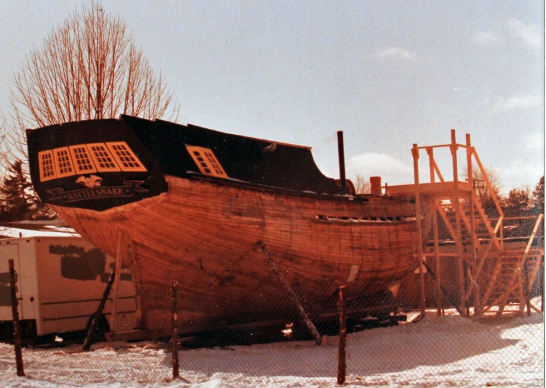
February 22, 1984 was an exciting day for our little town. The pirate ship “Rattlesnake” was being loaded on a flatbed trailer to begin its three hour trip from Rama to Jackson’s Point. The boat was the creation of artist and wood carver David May. At eighty two feet long and weighing in at thirty tons, it was an incredible example of what a person can accomplish. It was a two/thirds scale model of a 1780’s pirate ship that had plundered the Atlantic.

Mr. May had been looking for a place to complete his project and the Town of Georgina was looking for something to energize the lagging tourist trade in Jackson’s Point. A Tourist Industry Consultant from Orillia had been working with the May’s and she thought of the Town of Georgina. She put the two parties together and a deal was done. Everyone was excited by the prospect of this magnificent creation being completed on Bonnie Park. A site was prepared about a hundred metres back from the beach, right next to the fence on the southern edge of the park.
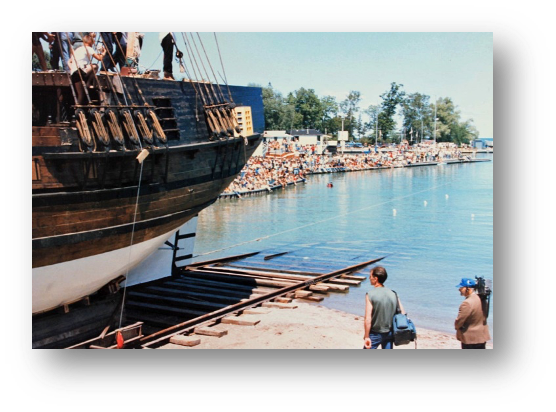
It was the perfect place as the “Rattlesnake” was also the home of the May family. This location gave the May’s access to the washroom in the park, and allowed them to use the building as the workshop.

Over the next year and a half the May’s worked away. The deal was working out for both parties. The boat was coming together nicely with the owners greeting all visitors with warmth and respect. Grants were flowing in to hire people to help with the build, corporate sponsors such as Minwax were contributing goods, Toronto media were doing interviews from and about the “Rattlesnake”, and the forgotten skill of planking a hull was an unexpected topic of conversation.

 It was a pretty exciting period, with carloads of curious tourists on the weekends and local sidewalk inspectors doing a daily drive-by inspection. My wife Kim and I weren’t living at the Point at that time, but we made a special trip up to see the boat. Mr. May was charming and showed us around, taking time away from his work to be very accommodating. He had almost taken on a pirate’s aura, with his full beard and bold demeanor. Even the most ardent of critics were having trouble finding something to complain about.
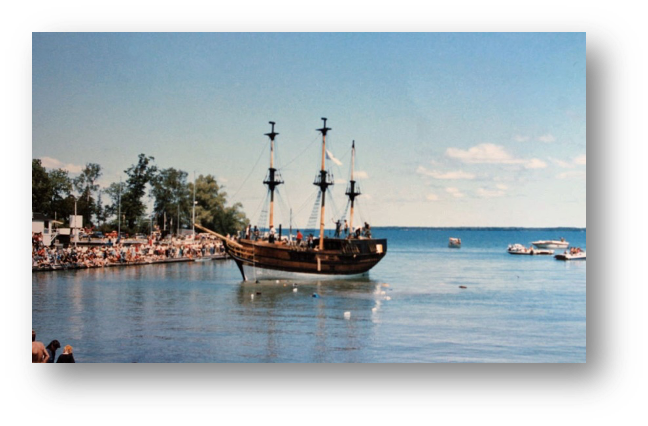
February 20, 1985 was an exciting day. The 3, 34 foot long, 600 pound masts were ready to be “stepped”. A local sign company arrived with their crane and the masts were set upright and slipped into place. We suddenly had a real pirate ship! Four months later, June 26, 1985, was the big day. It was a perfect early summer day, clear blue skies, warm, and the lake was calm and clear.

The crowds were huge, reported to be from 500 (low) to as many as 2,000 (probably more accurate). The shore and docks were lined with people, Bonnie Park was crowded, and several boats bobbed out in the harbour. The Town had excavated a section of the beach and had set up a temporary marine railway. Podiums were erected, a folk group entertained and it was the most excitement Bonnie Park had seen in decades. Mr. May’s lifetime dream was ready for her debut, and with a sounding of “All Clear!!” she slipped easily into the water and bobbed gently in the calm water, her water line perfectly level and several inches out of the water. Perfect.
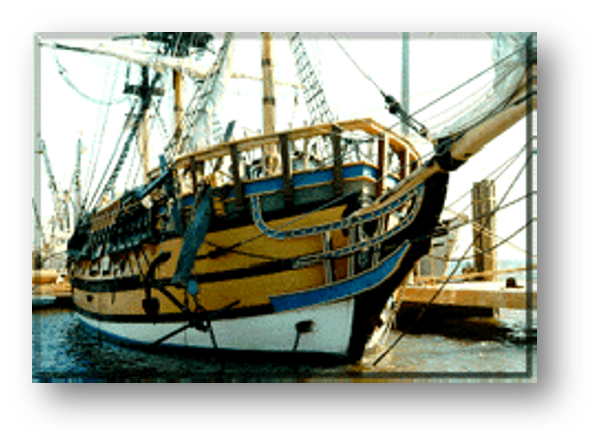
Over the next couple of months the “Rattlesnake” was moored to the town dock and her shakedown runs were all trouble free, more or less. She moored up along the Jackson’s Point dock, still creating interest and traffic.

As the July 1, 1986 celebrations approached things were readied for cruises of the Lake. “Rattlesnake” played a big part of the celebrations. All went well, the ship performed well and impressed all who saw her, or were lucky enough to get a ride.

And then she was gone. That night the rigging was dismantled, the masts were taken down and she was halfway down the Trent before Georgina officials were made aware of her departure. With a contract in hand that had been signed in the spring guaranteeing three years of service to the Town, they had the flight stopped by court injunction in the Trent system. This was relinquished shortly thereafter as the boat was impeding traffic in the canal, and she was allowed to carry on to the Toronto Harbour.

The Town was understandably outraged, demanding that the boat return and fulfill its obligations. A $20,000 loan from the Jackson’s Point B.I.A. was repaid but other than that no other resolution was reached, as far as I know. The ownership of the “Rattlesnake” had changed to a numbered company and the boat, reportedly valued at $1,700,000 in 1986 dollars, fell off my radar. It was rumoured to be seen in Florida or along the shore of Lake Ontario, but its final fate is unknown to me.
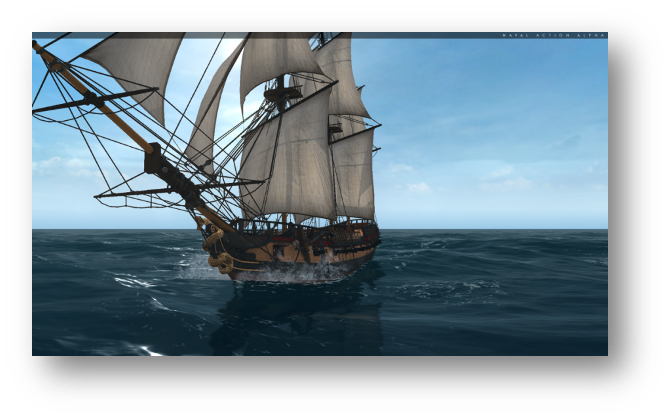
This story was compiled with the aid of the Keswick library and their wonderful collection of Georgina Advocate back issues, and my own recollections. I had a tour of the boat early on and was present at the launch, but that was the extent of my involvement. If you have anything to add to this story, I would love to hear from you. – Paul Brady, March 24, 2019.    Originally published in the Georgina Post in April, 2019.

Editor’s note: –

The Rattlesnake in now in Jacksonville Florida at The Maritime Heritage Foundation,  the sponsor of a Sea Explorer Chapter of the Boy Scouts of America aboard the replica vessel.  The Foundation is currently planning expansion of its existing programs to include a sailing school, navigation, oceanography, and marine science programs while emphasizing the importance of environmental stewardship in a maritime environment. The Rattlesnake is currently moored in the St. Johns River of Jacksonville, which provides an on sight location to enhance its programs.

The Revolutionary War privateer RATTLESNAKE was designed in 1779-80 by John Peck, a Boston naval architect.  The original RATTLESNAKE was originally built in Plymouth Massachusetts, and in style resembled a miniature frigate, which had a separate quarter deck and forecastle. She was very lightly built and was reputedly very fast. These features are rather unusual for a privateer. She carried up to 20 guns, (Probably six and nine pounders) and had a usual complement of 85 men. Launched in 1780 at Plymouth, Massachusetts, she was commissioned on 12 June 1781 under Commander Mark Clark (or Clarke) as the Massachusetts privateer Rattlesnake.

Little is known of her career except that it was brief. Shortly after her commissioning, she was captured by the British frigate ASSURANCE (44 guns, Captain James Cumming) on the 17th of June. She was sent into New York, arriving on the 8th of July and was purchased into the Royal Navy on the 28th.  On November 30, 1781 she was re-registered CORMORANT (the Royal Navy already had a RATTLESNAKE) and sailed under Captain John Melcombe’s command carrying to England the first news of General Cornwallis’s defeat at Yorktown in the American Revolution. She went on to serve in the Royal Navy as the CORMORANT until re-commissioned as the CORMORANT RATTLESNAKE in 1783.  She subsequently served in the waters off Britain, Western Europe, and in the Mediterranean. In July 1786 she was deemed surplus to navy requirements, and was paid off, then sold on October 10th of that year.  The vessel was considered unusually fast, and her hull lines were recorded by the British Admiralty after capture and have come down to us today.  

Editor’s sources for the above: https://www.streport.com/files/rsnake1.htm; Wikipedia; images from Google


Comments